
GEM OLIVINE (PERIDOT) FROM ZABARGAD ISLAND IN THE RED SEA
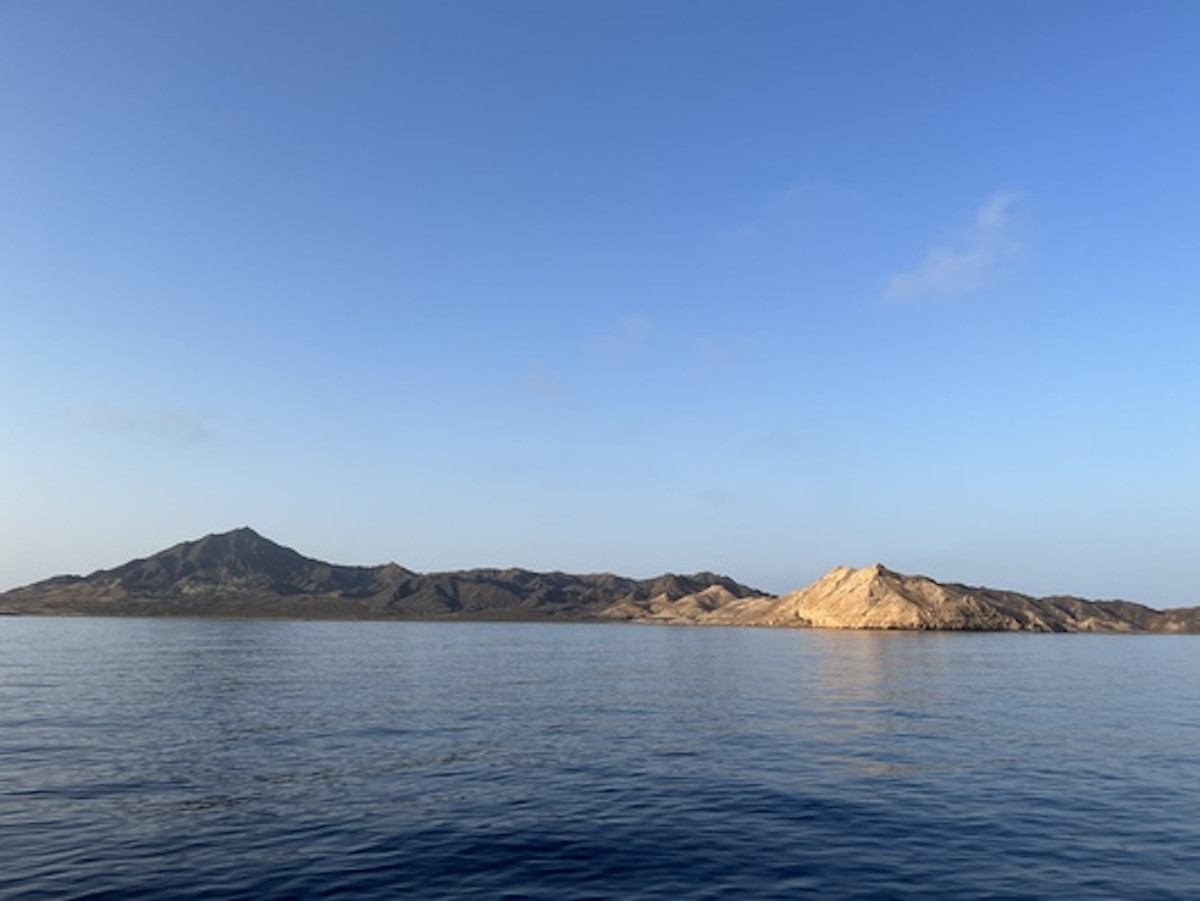
Peridot (or chrysotile) is the yellowish green to green gem variety of olivine, one of the most common rock-forming minerals in low-silica igneous and metamorphic rocks. It has been used for gem purposes for more than two millennia. In ancient Egypt, sailors occasionally landed on a small rocky island located about 80 kilometers south-east of the important Red Sea trading port of Berenike on the Egyptian coast. They referred to this place as the “island of the serpents”, and there they found green crystals in the sand that reportedly “glowed in the moonlight”. In his Natural History published around 77 CE, the Roman author Pliny the Elder tells that peridot gems had been presented to the Egyptian Queen, Berenice, a wife of the Pharoah Ptolemy Soter (about 300 BCE), although there is no direct archaeological evidence for the use of these crystals as gems at this time. Pliny wrote:
“Topazos (peridot) is a stone that is still held in very high estimation for its green tints: indeed, when it was first discovered, it was preferred to every other kind of precious stone. It so happened that some Troglodytic pirates, suffering from tempest and hunger, having landed upon an island off the coast of Arabia known as Cytis, when digging there for roots and grass, discovered this precious stone: such, at least, is the opinion expressed by Archelaus. Juba says that there is an island in the Red Sea called “Topazos," at a distance of three hundred stadia from the mainland; that it is surrounded by fogs and is often sought by navigators in consequence; and that, owing to this, it received its present name, the word "topazin" meaning "to seek," in the language of the Troglodytæ [an ancient people living along the African Red Sea coast]. He states also, that Philon, the king's præfect, was the first to bring these stones from this island; that, on his presenting them to Queen Berenice, the mother of the second Ptolemæus, she was wonderfully pleased with them; and that, at a later period, a statue, four cubits in height, was made of this stone, in honor of Arsinoë, the wife of Ptolemæus Philadelphus, it being consecrated in the temple known as the Golden Temple." (Pliny the Elder, Natural History, Book 37, Chapter 32).
Subsequent Egyptian rulers reportedly ordered that these crystals be collected and then to be delivered to the royal gem cutters for polishing. The gem was used occasionally as cabochons or intaglio-cut stones in rings in the Mediterranean region during the Ptolemaic and Imperial Roman periods, with known artefacts ranging from 250 BCE to 500 CE.
Other early writers confirmed this historical Red Sea source of olivine (and only known source at the time), as described by Sydney Ball in his 1950 book “A Roman Book on Precious Stones”. In ancient times, peridot crystals were referred to unknowingly as “topaz”, and the Red Sea location as the island of “Topazos”, “Tropazios”, or “Topazius”. Today, it is called Zabargad or Saint John’s Island. In the published literature, the name Zabargad is spelled in various ways. The ancient port of Berenike was abandoned in about the mid-6th century AD, and the site was forgotten until its rediscovery in 1818. It seems likely that Zabargad peridots were brought to Egypt through this port.
Writing about 50 BCE, the Greek historian Diodorus Siculus (or Diodorus of Sicily) described the occurrence of peridot (“topaz”) on this island in the Red Sea, and he gave some details of the difficult and lonely life of the miners:
“And as a man coasts along these regions he comes to an island which lies at a distance out in the open sea and stretches for a length of eighty stadia (~ 14 km); the name of it is Ophiodes and it was formerly full of fearful serpents of every variety, which was in fact the reason why it received this name, but in later times the kings at Alexandria have laboured so diligently on the reclaiming of it that not one of the animals which were formerly there is any longer to be seen on the island. However, we should not pass over the reason why the kings showed diligence in the reclamation of the island. For there is found on it the topaz, as it is called, which is a pleasing transparent stone, similar to glass, and of a marvellous golden hue. Consequently, no unauthorized person may set foot upon the island and it is closely guarded, every man who has approached it being put to death by the guards who are stationed there. And the latter are few in number and lead a miserable existence. For in order to prevent any stone being stolen, not a single boat is left on the island; furthermore, any who sail by pass along it at a distance because of their fear of the king; and the provisions which are brought to it are quickly exhausted and there are absolutely no other provisions in the land. Consequently, whenever only a little food is left, all the inhabitants of the village sit down and await the arrival of the ship of those who are bringing the provisions, and when these are delayed they are reduced to their last hopes. And the stone we have mentioned, being found in the rock, is not discernible during the day because of the stifling heat, since it is overcome by the brilliance of the sun, but when night falls it shines in the dark and is visible from afar, in whatever place it may be. The guards on the island divide these places by lot among themselves and stand watch over them, and when the stone shines they put around it, to mark the place, a vessel corresponding in size to the chunk of stone which gives out the light; and when day comes and they go their rounds they cut out the area which has been so marked and turn it over to men who are able by reason of their craftsmanship to polish it properly.”
Geologically, the Red Sea lies along a tectonic boundary zone that marks the separation from the African from the Arabian crustal plates. Zabargad Island is a rare example of lithospheric rocks from the upper mantle – mainly peridotites – that have been uplifted to the earth’s surface as part of this divergent continental margin. While of importance during Ptolemaic and Roman times, the island eventually became lost to history, and it was only rediscovered in the mid-16th century by the Portuguese explorer Juan de Castro who passed by the island and recorded it in his ship’s logbook.
How to Use this Reading List
This reading list gives you an opportunity to learn more about the history of gem peridot (olivine) from Zabargad Island in the Red Sea. Entries in the list are presented in chronological order to emphasize the development of ideas over time. The list is not comprehensive, but is a compilation of some interesting information that has often been forgotten or overlooked.
Many of the articles in the reading list exist in the public domain and can be found online at digital libraries such as Hathitrust, Internet Archive, or other digital repositories. More recent publications can often be found in libraries. Abstracts of these more recent articles can usually be found on the website of the original journal or magazine, and the article itself is often available for purchase from the publisher.
Versuch über den Topas der Alten, und den Chrysolith des Plinius [Essay on the Topaz of the Ancients, and the Chrysolite of Pliny], I.E. von Born, Abhandlungen einer Privatgesellschaft in Böhmen, Vol. 2, pp. 1-43, (1776). The author discusses the confusion among ancient writers between the yellow-green gem minerals topaz and chrysolite (or peridot).
De l'Isle d'Ophiodes ou Topazos et de la Montagne des Emeraudes [The Island of Ophiodes or Topazos and the Mountain of Emeralds], F.M. de Rozière, De la Géographie Comparée et de l’Ancien État des Côtes de la Mer Rouge, in the “Description de l’Égypte”, 2nd Edition, C.L.F. Panckouche Imprimerie, Paris, Vol. 6, Chap. 6, pp. 352-356, (1822). The author, a mining engineer, was a member of the large contingent of scientists and scholars who accompanied the military campaign of Napoleon Bonaparte in Egypt (1798-1801). He sought out and collected mineral and rock samples from throughout the country. In this article, he discussed both peridot from Zabargad Island and the “emerald mountain” located in the Eastern Desert between the Nile River and the Red Sea.
Notice on the Ruins of Berenice, R. Wellsted, Journal of the Royal Geographical Society of London, Vol. 6, pp. 96-100, (1836). The author, a lieutenant in the Indian Navy, traveled extensively in Arabia in the 1830s. In this article he described his visit to the ruins of the Ptolemaic/Roman port town of Berenike on the Red Sea coast. This article was summarized in Das Ausland, Vol. 11, No. 43, pp. 169-170, (1838). The author published a two-volume book on his travels in Arabia in 1838. In the second volume, he described a visit to the Red Sea coast of Arabia, including Saint John’s Island where he observed the ancient peridot mines (pp. 309-311).
“The Natural History of Gems and Decorative Stones”, C.W. King, Bell & Daldy Publishers, London, 377 pp., (1867). This book contains a chapter on Zabargad Island as the source of ancient peridot (pages 312-318).
“Ueber die in Altägyptischen Texten Erwähnten Bau- und Edelsteine auf deren Beschaffung, Bearbeitung und Verwendung, [About Ancient Egyptian Texts that Mention Building Stones and Gemstones, and on their Procurement, Processing and Use]”, F.C.H. Wendel, PhD Thesis, Kaiser Wilhelms Universität Strassburg, 121 pp., (1888). The author discusses ancient hieroglyphic texts that include references to what we now call peridot from Zabargad Island (pages 113-116).
Nubische Ortsnamen bei den Klassikern [Nubian Place Names among the Classics], H. Schäfer, Zeitschrift für Ägyptische Sprache und Alterthumskunde, Vol. 33, pp. 96-100, (1895). A brief discussion of the classical name Topazos for Zabargad Island. There is also a brief note by the same author in Vol. 34, p. 92, (1896).
Les Péridots de la Mer Rouge [The Peridots of the Red Sea], Author unknown, La Nature, Vol. 34, Supplement 1728, p. 42, (1906). A note on the peridot deposit on Zabargad Island.
Sur le Gisement de Chrysolite de l’Ile Saint-Jean (Mer Rouge) [The Deposit of Chrysolite (Peridot) on the Island of Saint John (Red Sea)], M.L. Michel, Bulletin de la Société Française de Minéralogie, Vol. 29, pp. 360-361, (1906). The author, a famous French geologist, gives a brief description of the morphology of the Egyptian peridot crystals. A summary appeared in the Transactions of the Institution of Mining Engineers, Vol. 34, pp. 535-536, (1908).
Sur Quelques Minéraux d’Égypte [The Various Minerals of Egypt], J. Couyat, Bulletin de la Société Française de Minéralogie, Vol. 31, No. 8, pp. 341-349, (1908). Descriptions are given of minerals found in the country including the peridot crystals on Saint John’s Island.
Ports Gréco-Romains de la Mer Rouge et Grandes Routes de Désert Arabique [Greco-Roman Ports on the Red Sea and Great Routes to the Arabian Desert], J. Couyat, Comptes Rendus des Séances de l'Académie des Inscriptions et Belles-Lettres, Vol. 54, No. 6, pp. 525-542, (1910). The author reviews the ancient Red Sea ports and the historical trade between Egypt and Arabia.
“The Geography and Geology of South-Eastern Egypt”, J. Ball, Egypt Ministry of Finance - Survey Department, 394 pp., (1912). Book not seen.
Sur les Péridots Collectionnés de 1900 à 1906 dans l’Ile de Zeberget (Mer Rouge) et Appartenant à M. Ch. Haccius, à Genève [The Peridots Collected between 1900 and 1906 on the Island of Zabargad (Red Sea) Belonging to Monsieur Ch. Haccius of Geneva], A. Brun, Compte Rendu des Séances de la Société de Physique et d’Histoire Naturelle de Genève, Vol. 38, No. 1, pp. 13-17, (1921). Results are presented of a study of peridot crystals from Zabargad Island.
“Report on the Mineral Industry of Egypt”, Author unknown, Ministry of Finance, Cairo, (1922). As discussed on pages 25-26, large peridot crystals occur on Zabargad in veins or dikes in a decomposed area of serpentinized peridotite on the eastern side of the island; the dikes contain open cavities with transparent peridot crystals.
Les Mines d’Egypte [The Mines of Egypt], I.S. Pasha, Bulletin de la Société Royale de Géographie d'Egypte, Vol. 11, No. 3/4, pp. 147-168, (1922). The author discusses ancient mines in the country including the peridot deposit.
“Preliminary Geological Report on Saint John’s Island (Red Sea)”, F.W. Moon, Geological Survey of Egypt, Government Press, Cairo, 41 pp., (1923). Publication not seen.
“Le Désert Oriental Égyptien: du Nil à la Mer Rouge; ses Richesses dans le Passé son Importance dans l'Avenir [The Eastern Desert of Egypt: Between the Nile and the Red Sea; Its Wealth in the Past and Its Importance in the Future]”, J. Raimondi, l'Imprimerie de l'Institut français d'Archéologie Orientale pour la Société Royale de Géographie d'Egypte, Cairo, 96 pp., (1923). Book not seen.
The Roman Roads and Stations in the Eastern Desert of Egypt, G.W. Murray, Journal of Egyptian Archaeology, Vol. 11, No. 3/4, pp. 138-150, (1925). Article not seen.
Ein aussergewohnlich grosser Olivinkristall on Edelsteingute [An Exceptionally Large Gem Olivine Crystal], W.F. Eppler, Zentralblatt für Mineralogie, Geologie und Paläontologie A, pp. 102-105, (1939). Description of a large peridot crystal from Zabargad Island that is now in the possession of GIA.
Zeberged: The Shipwrecked Sailor’s Island, G.A. Wainwright, Journal of Egyptian Archaeology, Vol. 32, (December), pp. 31-38, (1946). Article not seen.
Berenice Troglodytica, D. Meredith, Journal of Egyptian Archaeology, Vol. 43, (December), pp. 56-70, (1957). The author discusses the archaeological rediscovery of the ancient Red Sea port town of Berenike which began in the early 19th century.
Romano-Aegyptiaca, H. Kahane and R. Kahane, Romance Philology, Vol. 14, No. 4, pp. 287-294, (1961). The authors discuss the etymological history of the word peridot.
Famous Mineral Localities: Saint John’s Island, Egypt, W.E. Wilson, Mineralogical Record, Vol. 7, No. 6, pp. 310-314, (1976). The author discusses the history and occurrence of peridot on Zabargad Island, and he suggests that thousands of crystals were likely recovered there in ancient times.
Genesis of Peridot in St. John’s Island, Red Sea, and its Relation to the Metasomatism of the Ultrabasic Rocks, E.M. El-Shazly and G.S. Saleeb-Roufaiel, Egyptian Journal of Geology, Vol. 22, pp. 103-122, (1978). Article not seen.
Zabargad: The Ancient Peridot Island in the Red Sea, E. Gübelin, Gems & Gemology, Vol. 17, No. 1, pp. 2-8, (1981). Based on a visit made in 1980, the famous Swiss gemologist gives a description of the peridot occurrence on Zabargad, along with information on the history of the deposit and a summary of the gemological properties of the material. The article had been published previously in the German mineral magazine Lapis, Vol. 5, No. 11, pp. 19-26, (1980).
Origin Hydrothermale des Olivines Gemmes de l’Ile de Zabargad (St. John) Mer Rouge, par l’Etude de leurs Inclusions [Hydrothermal Origin of Gem Olivines at Zabargad Island (Saint John) Red Sea, through a Study of their Inclusions], R. Clocchiatti, D. Massare and C. Jehanno, Bulletin de Minéralogie, Vol. 104, No. 4, pp. 354-360, (1981). Article not seen.
A Great Gem and Crystal Mine - St. John's Island, Egypt, P. Bancroft, Lapidary Journal, Vol. 34, No. 10, pp. 2138-2146, (1981). A description of the peridot mines.
Upper Mantle beneath a Young Oceanic Rift: Peridotites from the Island of Zabargad (Red Sea), E. Bonatti, P. Hamlyn and G. Ottonello, Geology, Vol. 9, No. 10, pp. 474-479, (1981). Zabargad Island represents a section of unaltered mantle-derived peridotite rock that was uplifted from depths of 30 kilometers or more in the oceanic lithosphere. This uplift is geologically related to the formation of the continental rift zone that is marked by the position of the Red Sea.
Peridot von Zabargad, Rotes Meer [Peridot from Zabargad, Red Sea], G. Kurat, G. Niedermayr and M. Prinz, Der Aufschluss, Vol. 33, No. 5, pp. 169-182, (1982). This article discusses the occurrence, mineralogical properties, inclusions, and chemical composition of the Zabargad peridot.
St. John’s Island (Red Sea): A New Geophysical Model and its Implications for the Emplacement of Ultramafic Rocks in Fracture Zones and at Continental Margins, P. Styles and K.D. Gerdes, Earth and Planetary Science Letters, Vol. 65, No. 2, pp. 353-368, (1983). Geophysical data suggest that the peridotite body that composes Saint John’s Island extends to a depth of at least 8 kilometers. The authors discuss several models for the emplacement of these mantle-derived peridotite rocks, and they conclude that it was associated with the onset of continental rifting and the rejuvenation of a pre-existing continental fracture zone.
Zabargad (St. John’s) Island: An Uplifted Fragment of Sub-Red Sea Lithosphere, E. Bonatti, R. Clocchiatti, P. Colantoni, R. Gelmini, G. Marinelli, G. Ottonello, R. Santacroce, M. Taviani, A.A. Abdel-Meguid, H.S. Assaf and M.A. El Tahir, Quarterly Journal of the Geological Society of London, Vol. 140, No. 4, pp. 677-690, (1983). The island represents an uplifted block of upper mantle and crustal rocks, and its study yields information on the nature of the underlying lithosphere. The authors summarize the geology of the island. The uplift likely occurred in connection with the early stages of development of the continental rift which preceded the formation of the Red Sea.
Peridot – Olivine in Edelsteinqualitat [Peridot – Gem-quality Olivine], K. Fischer, Lapis Magazine, Vol. 10, No. 9, pp. 31-40, (1985). A review of the localities that produce gem-quality peridot.
Peridotites from the Island of Zabargad (St. John), Red Sea: Petrology and Geochemistry, E. Bonatti, G. Ottonello and P.R. Hamlyn, Journal of Geophysical Research, Vol. 91, No. B1, pp. 599-631, (1986). The authors present a detailed description of the peridotite rocks exposed on Zabargad and discuss their geologic origin.
Structure of Zabargad Island and Early Rifting of the Red Sea, A. Nicolas, F. Boudier and R. Montigny, Journal of Geophysical Research - Solid Earth, Vol. 92, No. B1, pp. 461-474, (1987); and Crustal Underplating and Evolution in the Red Sea Rift: Uplifted Gabbro/Gneiss Crustal Complexes on Zabargad and Brothers Islands, E. Bonatti and M. Seyler, Journal of Geophysical Research - Solid Earth, Vol. 92, No. B12, pp. 12803-12821, (1987); and The Gneiss of Zabargad Island: Deep Crust of a Rift, F. Boudier, A. Nicolas, S. Ji, J.R. Kienast and C. Mével, Tectonophysics, Vol. 150, No. 1/2, pp. 209-227, (1988); and The Zabargad Peridotite-Pyroxenite Association: Petrological Constraints on its Evolution, G.B. Piccardo, B. Messiga and R. Vannucci, Tectonophysics, Vol. 150, No. 1/2, pp 135-162, (1988); and Zabargad and the Isotopic Evolution of the sub-Red Sea Mantle and Crust, H.K. Brueckner, A. Zindler, M. Seyler and E. Bonatti, Tectonophysics, Vol. 150, No. 1/2, pp. 163-176, (1988). These articles discuss the geological formation of Zabargad Island, where peridotites occur along with gneisses and other metamorphic rocks. Petrographic analysis of the textural fabric of the latter indicates the island formed by the uplift of lithospheric rocks that were brought up to the surface as part of the early rifting of the Red Sea.
Sedimentological and Petrographic Study of the Zabargad Formation (Zabargad Island, Red Sea) and its Implication in the Red Sea Rifting, R. Gelmini, Giornale di Geologia, Vol. 51, No. 1, pp. 15-31, (1989). Article not seen.
“Gemstones and Their Origins”, P.C. Keller, Van Nostrand Reinhold, 144 pp., (1990). This book on various types of gem deposits contains a chapter (pages 119-127) on Zabargad Island and the peridot occurrence.
Gems of Antiquity, J.C. Zeitner, Lapidary Journal, Vol. 44, No. 5, pp. 22-27, (1990). A short review of gems including peridot that were important anciently.
Introduction d’Eau de Mer dans le Diapir Mantellique de Zabargad (Mer Rouge) d’Après les Isotopes du Sr and Nd [Strontium and Neodymium Isotopic Evidence for Seawater Infiltration into the Zabargad Mantle Diapir (Red Sea)], D. Busch, Comptes Rendus de l'Académie des Sciences, Series 2, Vol. 313, pp. 49-56, (1991); and Zabargad Peridotite: Evidence for Multistage Metasomatism during Red Sea Rifting, C. Dupuy, C. Mével, J-L. Boudiner and L. Savoyant, Geology, Vol. 19, No. 7, pp. 722-725, (1991); and High-Temperature Hydrothermal Alteration of Peridotite, Zabargad Island (Red Sea), F. Boudier and A. Nicolas, Journal of Petrology, Special Vol., No. 2, pp. 243-253, (1991); and Fracture-Zone Tectonics at Zabargad Island, Red Sea, Egypt, S. Marshak, E. Bonatti, H. Brueckner and T. Paulsen, Tectonophysics, Vol. 216, No. 3/4, pp. 379-385, (1992). Peridotites and related rocks on Zabargad represent the upper part of a mantle diapir (an ascending body of magna that intrudes crustal rocks) during the early stages of Red Sea rifting. These rocks were altered by several metasomatic events. Analysis of fluid inclusions in the gem olivine crystals suggest that they crystallized at high temperatures, low pressures, and in the presence of abundant volatile fluids including seawater introduced along shear-zones in the diapir as part of a hydrothermal metasomatic event.
Gem News: Peridot from Zabargad Island, J.I. Koivula and E. Fritsch, Gems & Gemology, Vol. 29, No. 2, pp. 134-135, (1993). A brief gemological description of the material.
Petrology and Geochemistry of Peridotites and Associated Vein Rocks of Zabargad Island, Red Sea, Egypt, G. Kurat, H. Palme, A. Embey-Isztin, J. Touret, T. Ntaflos, B. Spettel, F. Brandstätter, C. Palme, G. Dreibus and M. Prinz, Mineralogy and Petrology, Vol. 48, No. 2/4, pp. 309-341, (1993); Mantle Processes in the Sub-continental Lithosphere: The Case Study of the Rifted Spinel-Llherzolites from Zabargar (Red Sea), G.B. Piccardo, E. Rampone, R. Vannucci, N. Shimizu, L. Ottolini and P. Bottazzi, European Journal of Mineralogy, Vol. 5, No. 6, pp. 1039-1056, (1993). These two articles present results of a detailed geological study of the ultramafic peridotites found on the island. There is evidence for several generations of olivine mineralization. The gem peridot crystals, forming in veins in the peridotites, are part of the latest stage of olivine formation. The ultramafic rocks appear to have originated at depths of more than 85 kilometers in the lithosphere, and they experienced a rapid geological uplift to their present position in the crust.
Petrogenesis of Zabargad Ultramafic Rocks and Origin of Peridot, Zabargad Island, Red Sea, Egypt, A. Eldougdoug, F.Y. El-Eraky, A.A. Hussein and M.A. Takla, Annals of the Geological Survey of Egypt, Vol. 20, pp. 451-478, (1994). Article not seen.
On the Presence of OH- Groups in Zabargad Olivine Gems, P.F. Sciurto, Neues Jahrbuch für Mineralogie Monatshefte, No. 4, pp. 145-156, (1994). A spectroscopy study of the presence of hydroxyl groups in the peridot crystal structure.
Routes Through the Eastern Desert of Egypt, S.E. Sidebotham and R.E. Zitterkopf, Expedition Magazine, Vol. 17, No. 2, pp. 39-52, (1995). From the late 4th century BC to the 7th century AD, an extensive trade network existed between the Mediterranean region, southern Arabia, eastern Africa, and southern Asia. Much of this trade came along the Nile River and then across the eastern desert of Egypt to the Red Sea port of Berenike. These trade routes fell into disuse with the decline of the Roman Empire, and then were for the most part lost with the use of a sea route around the Horn of Africa beginning in the late 15th century. In this article, the authors recount the field work being carried out to rediscover archaeological sites along trade routes in this part of Egypt.
A Pan-African Origin and Uplift for the Gneisses and Peridotites of Zabargad Island, Red Sea: A Neodymiun, Samarium, Lead and Osmium Isotope Study, H.K. Brueckner, M.A. Elhaddad, B. Hamelin, S. Hemming, A. Kröner, L Reisberg and M. Seyler, Journal of Geophysical Research, Vol. 100, No. B11, pp. 22283-22297, (1995). Isotopic data suggest that the gneisses and peridotites found on Zabargad Island formed largely during the Pan-African orogeny (700-600 million years ago), rather than the geologically more recent tectonic opening of the Red Sea. However, post-orogenic metasomatism of the peridotites by high-temperature, hypersaline solutions led to the formation of the gem-quality peridot crystals as well as low-pressure mineral assemblages that are found.
Stratigraphic and Structural Evolution of Zabargad Island (Red Sea, Egypt) Since the Early Cretaceous, W. Bosworth, M. Darwish, P. Crevello, M. Taviani and S. Marshak, Third International Conference on the Geology of the Arab World, Cairo University, pp. 161-190, (1996). The authors review the geological history of the island and the processes which gave rise to the features observed there today.
Petrogenesis of Zabargad Ultramafic Rocks and Origin of Peridot, Zabargad Island, Red Sea, Egypt, M.A. Takla, A.A. Eddougdoug, A.A.A. Hussien and F.Y. El-Eraky, Annals of the Geological Survey of Egypt, Vol. 20, No. 1, pp. 451-478, (1997). Article not seen.
Proterozoic Melting in the Northern Peridotite Massif, Zabargad Island: Osmium Isotopic Evidence, J.E. Snow and G. Schmidt, Terra Nova, Vol. 11, No. 1, pp. 45-50, (1999). There are two geological models for the origin of the peridotite – the bodies represent lower mantle rocks that were juxtaposed with older crustal gneisses during the geologically recent tectonic opening of the Red Sea, or there was a combination of more ancient lower crustal and upper mantle rocks that were uplifted together during the Pan-African orogeny. The authors suggest that their osmium isotopic data seem to favor the second model for the formation of the northern massif.
Late Roman Berenike, S.E. Sidebotham, Journal of the American Research Center in Egypt, Vol. 39, pp. 217-240, (2002). The author summarizes eight seasons of archaeological fieldwork at the ancient Red Sea port, a major commercial center for trade between the Mediterranean and Arabia, East Africa, and South Asia.
Berenike Crossroads: The Integration of Information, W.Z. Wendrich, R.S. Tomber, S.E. Sidebotham, J.A. Harrell, R.T.J. Cappers and R.S. Bagnall, Journal of Economic and Social History of the Orient, Vol. 46, No. 1, pp. 46-87, (2003). The harbor town of Berenike on the Red Sea coast functioned in the long-distance trade between the Mediterranean and the Indian Ocean Basin from the third century BC to the early sixth century AD. The authors discuss the context of trade, which presumably included the import of peridot from nearby Zabargad Island.
Trace Elements and Lithium Isotope Systematics in Zabargad Peridotites: Evidence of Ancient Subduction Processes in the Red Sea Mantle, R.A. Brooker, R.H. James and J.D. Blundy, Chemical Geology, Vol. 212, No. 1/2, pp. 179-204, (2004). Trace element and isotopic chemical data suggest that the Zabargad peridotites exhibit features that are more consistent with ancient subduction zone processes operating in the region during the Pan-African orogeny, and they are less consistent with an origin during more recent tectonic rifting.
“Roman Footprints at Berenike: Archaeobotanical Evidence of Subsistance and Trade in the Eastern Desert of Egypt”, R.T.J. Cappers, Monograph No. 55, Cotsen Institute of Archaeology, University of California, Los Angeles, 229 pp., (2006). This book describes a study of the organization of trade and of a subsistence economy at Berenike together with Myos Hormos, another important ancient port on the Red Sea.
Egypt’s Evening Emeralds – Peridot Mining on Zabargad Island, J. Harrell and E. Bloxam, Minerva, Vol. 21, No. 6, pp. 18-22, (2010). The authors trace the mention of Egyptian peridot from Zabargad beginning in the ancient records. They describe a visit to discover and archaeologically excavate the long-lost peridot mine, which lies on the southeastern shore of the island and consists of roughly 150 open surface pits. Near the mine area, evidence of the ruins of stone dwellings was also found – based on these ruins, perhaps 10-20 miners worked at the site. There was no source of fresh water on the island. The mine appeared to have been abandoned in the mid-6th century AD at about the same time when the nearby port city of Berenike also ceased to be inhabited.
“Berenike and the Ancient Mediterranean Spice Route”, S.E. Sidebotham, University of California Press, Berkeley, 434 pp., (2011). This book represents a major study of ancient trade on the Red Sea and across the Eastern Desert of Egypt, much of which was centered on the port of Berenike.
Berenike: Archaeological Fieldwork at a Ptolemaic-Roman Port on the Red Sea Coast of Egypt (2011-2012), S.E. Sidebotham and I. Zych, Sahara, Vol. 23, p. 29-48, (2012). Report on fieldwork at the ancient port.
On the Topaz Island: Diodorus of Sicily and the Byzantine "Florilegium Coislinianum", J. Michels and P. van Deun, Byzantion, Vol. 83, pp. 283-296, (2013). This book is a 9th-10th century anthology of information on a variety of topics, including the description by the 1st century BC Greek historian Diodorus Siculus of the “Snake Island” in the Red Sea and the “topaz stone” (peridot) that was mined there.
In Search of Berenike of the Ptolemies: The Hellenistic Fort of Berenike Trogodytika, its Localization, Form and Development, M. Woźniak and J.K. Rądkowska, Polish Archaeology in the Mediterranean, Vol. 23, No. 1, pp. 505-526, (2014). An archaeological field study of the Hellenistic origins of the port town. A similar article by these authors appeared in Antiquity, Vol. 92, No. 366, 7 pp., (2018).
Discovery of the Red Sea Source of Topazos (Ancient Gem Peridot) on Zabargad Island, Egypt, J.A. Harrell, 12th Annual Sinkankas Symposium – Peridot and Uncommon Green Gem Minerals, Carlsbad, California, April 5, pp. 16-30, (2014). A description of the rediscovered ancient peridot mines on the island.
Archaeogeometry of Peridot, L. Thoresen and J.A. Harrell, 12th Annual Sinkankas Symposium – Peridot and Uncommon Green Gem Minerals, Carlsbad, California, April 5, pp. 31-51, (2014). The authors discuss ancient literature references to gem peridot, and they provide an inventory of historical carved gem peridots.
Peridot from St. John's / Zabargad Island, O. Revheim, https://www.mindat.org/article.php/2053/Peridot+from+St.+John%27s+_+Zabargad+Island, (2015). The author reviews the historical literature on the peridot locality.
Olivine in the Ancient World, F. Habashi, De Re Metallica, Vol. 27, No. 2, pp. 85-88, file:///C:/Users/Lodestar/Downloads/Olivine_stamped.pdf, (2016). A discussion of the ancient mines on Zabargad Island.
Zwischen Wüste und Meer: Die Hafen von Berenike in Ptolemäisch-Römischer Zeit [Between the Desert and the Sea: The Harbor of Berenike in Ptolemaic-Roman Times], S.E. Sidebotham, Antike Welt, No. 2, pp. 60-69, (2017). Article not seen.
When the Well Runs Dry: Climatic Instability and the Abandonment of Early Hellenistic Berenike, M. Woźniak and J.A. Harrell, Antiquity, Vol. 95, No. 380, pp. 349-366, (2021). Recent evidence suggests a multi-year drought in the late third century BCE may have caused the city’s freshwater source to run dry, which may have led to the subsequent abandonment of the port. The authors indicate that the drought was likely triggered by a volcanic eruption in 209 BCE that also produced other climate changes.
Morphological Evidence for the Extension of the Zabargad Transform Fault Zone to the Saudi Arabian Red Sea Margin. A. Petrovic, Y. Panara and V. Vahrenkamp, Journal of the Geological Society, Vol. 180, Article jgs2023-009, (2023). A geological and geophysical study of the Red Sea rift zone and the associated northwest-southeast trending transform faults.
Dr. James Shigley is a distinguished research fellow at the Gemological Institute of America in Carlsbad, California.
GEM OLIVINE (PERIDOT) FROM ZABARGAD ISLAND IN THE RED SEA
Peridot (or chrysotile) is the yellowish green to green gem variety of olivine, one of the most common rock-forming minerals in low-silica igneous and metamorphic rocks. It has been used for gem purposes for more than two millennia. In ancient Egypt, sailors occasionally landed on a small rocky island located about 80 kilometers south-east of the important Red Sea trading port of Berenike on the Egyptian coast. They referred to this place as the “island of the serpents”, and there they found green crystals in the sand that reportedly “glowed in the moonlight”. In his Natural History published around 77 CE, the Roman author Pliny the Elder tells that peridot gems had been presented to the Egyptian Queen, Berenice, a wife of the Pharoah Ptolemy Soter (about 300 BCE), although there is no direct archaeological evidence for the use of these crystals as gems at this time. Pliny wrote:
“Topazos (peridot) is a stone that is still held in very high estimation for its green tints: indeed, when it was first discovered, it was preferred to every other kind of precious stone. It so happened that some Troglodytic pirates, suffering from tempest and hunger, having landed upon an island off the coast of Arabia known as Cytis, when digging there for roots and grass, discovered this precious stone: such, at least, is the opinion expressed by Archelaus. Juba says that there is an island in the Red Sea called “Topazos," at a distance of three hundred stadia from the mainland; that it is surrounded by fogs and is often sought by navigators in consequence; and that, owing to this, it received its present name, the word "topazin" meaning "to seek," in the language of the Troglodytæ [an ancient people living along the African Red Sea coast]. He states also, that Philon, the king's præfect, was the first to bring these stones from this island; that, on his presenting them to Queen Berenice, the mother of the second Ptolemæus, she was wonderfully pleased with them; and that, at a later period, a statue, four cubits in height, was made of this stone, in honor of Arsinoë, the wife of Ptolemæus Philadelphus, it being consecrated in the temple known as the Golden Temple." (Pliny the Elder, Natural History, Book 37, Chapter 32).
Subsequent Egyptian rulers reportedly ordered that these crystals be collected and then to be delivered to the royal gem cutters for polishing. The gem was used occasionally as cabochons or intaglio-cut stones in rings in the Mediterranean region during the Ptolemaic and Imperial Roman periods, with known artefacts ranging from 250 BCE to 500 CE.
Other early writers confirmed this historical Red Sea source of olivine (and only known source at the time), as described by Sydney Ball in his 1950 book “A Roman Book on Precious Stones”. In ancient times, peridot crystals were referred to unknowingly as “topaz”, and the Red Sea location as the island of “Topazos”, “Tropazios”, or “Topazius”. Today, it is called Zabargad or Saint John’s Island. In the published literature, the name Zabargad is spelled in various ways. The ancient port of Berenike was abandoned in about the mid-6th century AD, and the site was forgotten until its rediscovery in 1818. It seems likely that Zabargad peridots were brought to Egypt through this port.
Writing about 50 BCE, the Greek historian Diodorus Siculus (or Diodorus of Sicily) described the occurrence of peridot (“topaz”) on this island in the Red Sea, and he gave some details of the difficult and lonely life of the miners:
“And as a man coasts along these regions he comes to an island which lies at a distance out in the open sea and stretches for a length of eighty stadia (~ 14 km); the name of it is Ophiodes and it was formerly full of fearful serpents of every variety, which was in fact the reason why it received this name, but in later times the kings at Alexandria have laboured so diligently on the reclaiming of it that not one of the animals which were formerly there is any longer to be seen on the island. However, we should not pass over the reason why the kings showed diligence in the reclamation of the island. For there is found on it the topaz, as it is called, which is a pleasing transparent stone, similar to glass, and of a marvellous golden hue. Consequently, no unauthorized person may set foot upon the island and it is closely guarded, every man who has approached it being put to death by the guards who are stationed there. And the latter are few in number and lead a miserable existence. For in order to prevent any stone being stolen, not a single boat is left on the island; furthermore, any who sail by pass along it at a distance because of their fear of the king; and the provisions which are brought to it are quickly exhausted and there are absolutely no other provisions in the land. Consequently, whenever only a little food is left, all the inhabitants of the village sit down and await the arrival of the ship of those who are bringing the provisions, and when these are delayed they are reduced to their last hopes. And the stone we have mentioned, being found in the rock, is not discernible during the day because of the stifling heat, since it is overcome by the brilliance of the sun, but when night falls it shines in the dark and is visible from afar, in whatever place it may be. The guards on the island divide these places by lot among themselves and stand watch over them, and when the stone shines they put around it, to mark the place, a vessel corresponding in size to the chunk of stone which gives out the light; and when day comes and they go their rounds they cut out the area which has been so marked and turn it over to men who are able by reason of their craftsmanship to polish it properly.”
Geologically, the Red Sea lies along a tectonic boundary zone that marks the separation from the African from the Arabian crustal plates. Zabargad Island is a rare example of lithospheric rocks from the upper mantle – mainly peridotites – that have been uplifted to the earth’s surface as part of this divergent continental margin. While of importance during Ptolemaic and Roman times, the island eventually became lost to history, and it was only rediscovered in the mid-16th century by the Portuguese explorer Juan de Castro who passed by the island and recorded it in his ship’s logbook.
How to Use this Reading List
This reading list gives you an opportunity to learn more about the history of gem peridot (olivine) from Zabargad Island in the Red Sea. Entries in the list are presented in chronological order to emphasize the development of ideas over time. The list is not comprehensive, but is a compilation of some interesting information that has often been forgotten or overlooked.
Many of the articles in the reading list exist in the public domain and can be found online at digital libraries such as Hathitrust, Internet Archive, or other digital repositories. More recent publications can often be found in libraries. Abstracts of these more recent articles can usually be found on the website of the original journal or magazine, and the article itself is often available for purchase from the publisher.
Versuch über den Topas der Alten, und den Chrysolith des Plinius [Essay on the Topaz of the Ancients, and the Chrysolite of Pliny], I.E. von Born, Abhandlungen einer Privatgesellschaft in Böhmen, Vol. 2, pp. 1-43, (1776). The author discusses the confusion among ancient writers between the yellow-green gem minerals topaz and chrysolite (or peridot).
De l'Isle d'Ophiodes ou Topazos et de la Montagne des Emeraudes [The Island of Ophiodes or Topazos and the Mountain of Emeralds], F.M. de Rozière, De la Géographie Comparée et de l’Ancien État des Côtes de la Mer Rouge, in the “Description de l’Égypte”, 2nd Edition, C.L.F. Panckouche Imprimerie, Paris, Vol. 6, Chap. 6, pp. 352-356, (1822). The author, a mining engineer, was a member of the large contingent of scientists and scholars who accompanied the military campaign of Napoleon Bonaparte in Egypt (1798-1801). He sought out and collected mineral and rock samples from throughout the country. In this article, he discussed both peridot from Zabargad Island and the “emerald mountain” located in the Eastern Desert between the Nile River and the Red Sea.
Notice on the Ruins of Berenice, R. Wellsted, Journal of the Royal Geographical Society of London, Vol. 6, pp. 96-100, (1836). The author, a lieutenant in the Indian Navy, traveled extensively in Arabia in the 1830s. In this article he described his visit to the ruins of the Ptolemaic/Roman port town of Berenike on the Red Sea coast. This article was summarized in Das Ausland, Vol. 11, No. 43, pp. 169-170, (1838). The author published a two-volume book on his travels in Arabia in 1838. In the second volume, he described a visit to the Red Sea coast of Arabia, including Saint John’s Island where he observed the ancient peridot mines (pp. 309-311).
“The Natural History of Gems and Decorative Stones”, C.W. King, Bell & Daldy Publishers, London, 377 pp., (1867). This book contains a chapter on Zabargad Island as the source of ancient peridot (pages 312-318).
“Ueber die in Altägyptischen Texten Erwähnten Bau- und Edelsteine auf deren Beschaffung, Bearbeitung und Verwendung, [About Ancient Egyptian Texts that Mention Building Stones and Gemstones, and on their Procurement, Processing and Use]”, F.C.H. Wendel, PhD Thesis, Kaiser Wilhelms Universität Strassburg, 121 pp., (1888). The author discusses ancient hieroglyphic texts that include references to what we now call peridot from Zabargad Island (pages 113-116).
Nubische Ortsnamen bei den Klassikern [Nubian Place Names among the Classics], H. Schäfer, Zeitschrift für Ägyptische Sprache und Alterthumskunde, Vol. 33, pp. 96-100, (1895). A brief discussion of the classical name Topazos for Zabargad Island. There is also a brief note by the same author in Vol. 34, p. 92, (1896).
Les Péridots de la Mer Rouge [The Peridots of the Red Sea], Author unknown, La Nature, Vol. 34, Supplement 1728, p. 42, (1906). A note on the peridot deposit on Zabargad Island.
Sur le Gisement de Chrysolite de l’Ile Saint-Jean (Mer Rouge) [The Deposit of Chrysolite (Peridot) on the Island of Saint John (Red Sea)], M.L. Michel, Bulletin de la Société Française de Minéralogie, Vol. 29, pp. 360-361, (1906). The author, a famous French geologist, gives a brief description of the morphology of the Egyptian peridot crystals. A summary appeared in the Transactions of the Institution of Mining Engineers, Vol. 34, pp. 535-536, (1908).
Sur Quelques Minéraux d’Égypte [The Various Minerals of Egypt], J. Couyat, Bulletin de la Société Française de Minéralogie, Vol. 31, No. 8, pp. 341-349, (1908). Descriptions are given of minerals found in the country including the peridot crystals on Saint John’s Island.
Ports Gréco-Romains de la Mer Rouge et Grandes Routes de Désert Arabique [Greco-Roman Ports on the Red Sea and Great Routes to the Arabian Desert], J. Couyat, Comptes Rendus des Séances de l'Académie des Inscriptions et Belles-Lettres, Vol. 54, No. 6, pp. 525-542, (1910). The author reviews the ancient Red Sea ports and the historical trade between Egypt and Arabia.
“The Geography and Geology of South-Eastern Egypt”, J. Ball, Egypt Ministry of Finance - Survey Department, 394 pp., (1912). Book not seen.
Sur les Péridots Collectionnés de 1900 à 1906 dans l’Ile de Zeberget (Mer Rouge) et Appartenant à M. Ch. Haccius, à Genève [The Peridots Collected between 1900 and 1906 on the Island of Zabargad (Red Sea) Belonging to Monsieur Ch. Haccius of Geneva], A. Brun, Compte Rendu des Séances de la Société de Physique et d’Histoire Naturelle de Genève, Vol. 38, No. 1, pp. 13-17, (1921). Results are presented of a study of peridot crystals from Zabargad Island.
“Report on the Mineral Industry of Egypt”, Author unknown, Ministry of Finance, Cairo, (1922). As discussed on pages 25-26, large peridot crystals occur on Zabargad in veins or dikes in a decomposed area of serpentinized peridotite on the eastern side of the island; the dikes contain open cavities with transparent peridot crystals.
Les Mines d’Egypte [The Mines of Egypt], I.S. Pasha, Bulletin de la Société Royale de Géographie d'Egypte, Vol. 11, No. 3/4, pp. 147-168, (1922). The author discusses ancient mines in the country including the peridot deposit.
“Preliminary Geological Report on Saint John’s Island (Red Sea)”, F.W. Moon, Geological Survey of Egypt, Government Press, Cairo, 41 pp., (1923). Publication not seen.
“Le Désert Oriental Égyptien: du Nil à la Mer Rouge; ses Richesses dans le Passé son Importance dans l'Avenir [The Eastern Desert of Egypt: Between the Nile and the Red Sea; Its Wealth in the Past and Its Importance in the Future]”, J. Raimondi, l'Imprimerie de l'Institut français d'Archéologie Orientale pour la Société Royale de Géographie d'Egypte, Cairo, 96 pp., (1923). Book not seen.
The Roman Roads and Stations in the Eastern Desert of Egypt, G.W. Murray, Journal of Egyptian Archaeology, Vol. 11, No. 3/4, pp. 138-150, (1925). Article not seen.
Ein aussergewohnlich grosser Olivinkristall on Edelsteingute [An Exceptionally Large Gem Olivine Crystal], W.F. Eppler, Zentralblatt für Mineralogie, Geologie und Paläontologie A, pp. 102-105, (1939). Description of a large peridot crystal from Zabargad Island that is now in the possession of GIA.
Zeberged: The Shipwrecked Sailor’s Island, G.A. Wainwright, Journal of Egyptian Archaeology, Vol. 32, (December), pp. 31-38, (1946). Article not seen.
Berenice Troglodytica, D. Meredith, Journal of Egyptian Archaeology, Vol. 43, (December), pp. 56-70, (1957). The author discusses the archaeological rediscovery of the ancient Red Sea port town of Berenike which began in the early 19th century.
Romano-Aegyptiaca, H. Kahane and R. Kahane, Romance Philology, Vol. 14, No. 4, pp. 287-294, (1961). The authors discuss the etymological history of the word peridot.
Famous Mineral Localities: Saint John’s Island, Egypt, W.E. Wilson, Mineralogical Record, Vol. 7, No. 6, pp. 310-314, (1976). The author discusses the history and occurrence of peridot on Zabargad Island, and he suggests that thousands of crystals were likely recovered there in ancient times.
Genesis of Peridot in St. John’s Island, Red Sea, and its Relation to the Metasomatism of the Ultrabasic Rocks, E.M. El-Shazly and G.S. Saleeb-Roufaiel, Egyptian Journal of Geology, Vol. 22, pp. 103-122, (1978). Article not seen.
Zabargad: The Ancient Peridot Island in the Red Sea, E. Gübelin, Gems & Gemology, Vol. 17, No. 1, pp. 2-8, (1981). Based on a visit made in 1980, the famous Swiss gemologist gives a description of the peridot occurrence on Zabargad, along with information on the history of the deposit and a summary of the gemological properties of the material. The article had been published previously in the German mineral magazine Lapis, Vol. 5, No. 11, pp. 19-26, (1980).
Origin Hydrothermale des Olivines Gemmes de l’Ile de Zabargad (St. John) Mer Rouge, par l’Etude de leurs Inclusions [Hydrothermal Origin of Gem Olivines at Zabargad Island (Saint John) Red Sea, through a Study of their Inclusions], R. Clocchiatti, D. Massare and C. Jehanno, Bulletin de Minéralogie, Vol. 104, No. 4, pp. 354-360, (1981). Article not seen.
A Great Gem and Crystal Mine - St. John's Island, Egypt, P. Bancroft, Lapidary Journal, Vol. 34, No. 10, pp. 2138-2146, (1981). A description of the peridot mines.
Upper Mantle beneath a Young Oceanic Rift: Peridotites from the Island of Zabargad (Red Sea), E. Bonatti, P. Hamlyn and G. Ottonello, Geology, Vol. 9, No. 10, pp. 474-479, (1981). Zabargad Island represents a section of unaltered mantle-derived peridotite rock that was uplifted from depths of 30 kilometers or more in the oceanic lithosphere. This uplift is geologically related to the formation of the continental rift zone that is marked by the position of the Red Sea.
Peridot von Zabargad, Rotes Meer [Peridot from Zabargad, Red Sea], G. Kurat, G. Niedermayr and M. Prinz, Der Aufschluss, Vol. 33, No. 5, pp. 169-182, (1982). This article discusses the occurrence, mineralogical properties, inclusions, and chemical composition of the Zabargad peridot.
St. John’s Island (Red Sea): A New Geophysical Model and its Implications for the Emplacement of Ultramafic Rocks in Fracture Zones and at Continental Margins, P. Styles and K.D. Gerdes, Earth and Planetary Science Letters, Vol. 65, No. 2, pp. 353-368, (1983). Geophysical data suggest that the peridotite body that composes Saint John’s Island extends to a depth of at least 8 kilometers. The authors discuss several models for the emplacement of these mantle-derived peridotite rocks, and they conclude that it was associated with the onset of continental rifting and the rejuvenation of a pre-existing continental fracture zone.
Zabargad (St. John’s) Island: An Uplifted Fragment of Sub-Red Sea Lithosphere, E. Bonatti, R. Clocchiatti, P. Colantoni, R. Gelmini, G. Marinelli, G. Ottonello, R. Santacroce, M. Taviani, A.A. Abdel-Meguid, H.S. Assaf and M.A. El Tahir, Quarterly Journal of the Geological Society of London, Vol. 140, No. 4, pp. 677-690, (1983). The island represents an uplifted block of upper mantle and crustal rocks, and its study yields information on the nature of the underlying lithosphere. The authors summarize the geology of the island. The uplift likely occurred in connection with the early stages of development of the continental rift which preceded the formation of the Red Sea.
Peridot – Olivine in Edelsteinqualitat [Peridot – Gem-quality Olivine], K. Fischer, Lapis Magazine, Vol. 10, No. 9, pp. 31-40, (1985). A review of the localities that produce gem-quality peridot.
Peridotites from the Island of Zabargad (St. John), Red Sea: Petrology and Geochemistry, E. Bonatti, G. Ottonello and P.R. Hamlyn, Journal of Geophysical Research, Vol. 91, No. B1, pp. 599-631, (1986). The authors present a detailed description of the peridotite rocks exposed on Zabargad and discuss their geologic origin.
Structure of Zabargad Island and Early Rifting of the Red Sea, A. Nicolas, F. Boudier and R. Montigny, Journal of Geophysical Research - Solid Earth, Vol. 92, No. B1, pp. 461-474, (1987); and Crustal Underplating and Evolution in the Red Sea Rift: Uplifted Gabbro/Gneiss Crustal Complexes on Zabargad and Brothers Islands, E. Bonatti and M. Seyler, Journal of Geophysical Research - Solid Earth, Vol. 92, No. B12, pp. 12803-12821, (1987); and The Gneiss of Zabargad Island: Deep Crust of a Rift, F. Boudier, A. Nicolas, S. Ji, J.R. Kienast and C. Mével, Tectonophysics, Vol. 150, No. 1/2, pp. 209-227, (1988); and The Zabargad Peridotite-Pyroxenite Association: Petrological Constraints on its Evolution, G.B. Piccardo, B. Messiga and R. Vannucci, Tectonophysics, Vol. 150, No. 1/2, pp 135-162, (1988); and Zabargad and the Isotopic Evolution of the sub-Red Sea Mantle and Crust, H.K. Brueckner, A. Zindler, M. Seyler and E. Bonatti, Tectonophysics, Vol. 150, No. 1/2, pp. 163-176, (1988). These articles discuss the geological formation of Zabargad Island, where peridotites occur along with gneisses and other metamorphic rocks. Petrographic analysis of the textural fabric of the latter indicates the island formed by the uplift of lithospheric rocks that were brought up to the surface as part of the early rifting of the Red Sea.
Sedimentological and Petrographic Study of the Zabargad Formation (Zabargad Island, Red Sea) and its Implication in the Red Sea Rifting, R. Gelmini, Giornale di Geologia, Vol. 51, No. 1, pp. 15-31, (1989). Article not seen.
“Gemstones and Their Origins”, P.C. Keller, Van Nostrand Reinhold, 144 pp., (1990). This book on various types of gem deposits contains a chapter (pages 119-127) on Zabargad Island and the peridot occurrence.
Gems of Antiquity, J.C. Zeitner, Lapidary Journal, Vol. 44, No. 5, pp. 22-27, (1990). A short review of gems including peridot that were important anciently.
Introduction d’Eau de Mer dans le Diapir Mantellique de Zabargad (Mer Rouge) d’Après les Isotopes du Sr and Nd [Strontium and Neodymium Isotopic Evidence for Seawater Infiltration into the Zabargad Mantle Diapir (Red Sea)], D. Busch, Comptes Rendus de l'Académie des Sciences, Series 2, Vol. 313, pp. 49-56, (1991); and Zabargad Peridotite: Evidence for Multistage Metasomatism during Red Sea Rifting, C. Dupuy, C. Mével, J-L. Boudiner and L. Savoyant, Geology, Vol. 19, No. 7, pp. 722-725, (1991); and High-Temperature Hydrothermal Alteration of Peridotite, Zabargad Island (Red Sea), F. Boudier and A. Nicolas, Journal of Petrology, Special Vol., No. 2, pp. 243-253, (1991); and Fracture-Zone Tectonics at Zabargad Island, Red Sea, Egypt, S. Marshak, E. Bonatti, H. Brueckner and T. Paulsen, Tectonophysics, Vol. 216, No. 3/4, pp. 379-385, (1992). Peridotites and related rocks on Zabargad represent the upper part of a mantle diapir (an ascending body of magna that intrudes crustal rocks) during the early stages of Red Sea rifting. These rocks were altered by several metasomatic events. Analysis of fluid inclusions in the gem olivine crystals suggest that they crystallized at high temperatures, low pressures, and in the presence of abundant volatile fluids including seawater introduced along shear-zones in the diapir as part of a hydrothermal metasomatic event.
Gem News: Peridot from Zabargad Island, J.I. Koivula and E. Fritsch, Gems & Gemology, Vol. 29, No. 2, pp. 134-135, (1993). A brief gemological description of the material.
Petrology and Geochemistry of Peridotites and Associated Vein Rocks of Zabargad Island, Red Sea, Egypt, G. Kurat, H. Palme, A. Embey-Isztin, J. Touret, T. Ntaflos, B. Spettel, F. Brandstätter, C. Palme, G. Dreibus and M. Prinz, Mineralogy and Petrology, Vol. 48, No. 2/4, pp. 309-341, (1993); Mantle Processes in the Sub-continental Lithosphere: The Case Study of the Rifted Spinel-Llherzolites from Zabargar (Red Sea), G.B. Piccardo, E. Rampone, R. Vannucci, N. Shimizu, L. Ottolini and P. Bottazzi, European Journal of Mineralogy, Vol. 5, No. 6, pp. 1039-1056, (1993). These two articles present results of a detailed geological study of the ultramafic peridotites found on the island. There is evidence for several generations of olivine mineralization. The gem peridot crystals, forming in veins in the peridotites, are part of the latest stage of olivine formation. The ultramafic rocks appear to have originated at depths of more than 85 kilometers in the lithosphere, and they experienced a rapid geological uplift to their present position in the crust.
Petrogenesis of Zabargad Ultramafic Rocks and Origin of Peridot, Zabargad Island, Red Sea, Egypt, A. Eldougdoug, F.Y. El-Eraky, A.A. Hussein and M.A. Takla, Annals of the Geological Survey of Egypt, Vol. 20, pp. 451-478, (1994). Article not seen.
On the Presence of OH- Groups in Zabargad Olivine Gems, P.F. Sciurto, Neues Jahrbuch für Mineralogie Monatshefte, No. 4, pp. 145-156, (1994). A spectroscopy study of the presence of hydroxyl groups in the peridot crystal structure.
Routes Through the Eastern Desert of Egypt, S.E. Sidebotham and R.E. Zitterkopf, Expedition Magazine, Vol. 17, No. 2, pp. 39-52, (1995). From the late 4th century BC to the 7th century AD, an extensive trade network existed between the Mediterranean region, southern Arabia, eastern Africa, and southern Asia. Much of this trade came along the Nile River and then across the eastern desert of Egypt to the Red Sea port of Berenike. These trade routes fell into disuse with the decline of the Roman Empire, and then were for the most part lost with the use of a sea route around the Horn of Africa beginning in the late 15th century. In this article, the authors recount the field work being carried out to rediscover archaeological sites along trade routes in this part of Egypt.
A Pan-African Origin and Uplift for the Gneisses and Peridotites of Zabargad Island, Red Sea: A Neodymiun, Samarium, Lead and Osmium Isotope Study, H.K. Brueckner, M.A. Elhaddad, B. Hamelin, S. Hemming, A. Kröner, L Reisberg and M. Seyler, Journal of Geophysical Research, Vol. 100, No. B11, pp. 22283-22297, (1995). Isotopic data suggest that the gneisses and peridotites found on Zabargad Island formed largely during the Pan-African orogeny (700-600 million years ago), rather than the geologically more recent tectonic opening of the Red Sea. However, post-orogenic metasomatism of the peridotites by high-temperature, hypersaline solutions led to the formation of the gem-quality peridot crystals as well as low-pressure mineral assemblages that are found.
Stratigraphic and Structural Evolution of Zabargad Island (Red Sea, Egypt) Since the Early Cretaceous, W. Bosworth, M. Darwish, P. Crevello, M. Taviani and S. Marshak, Third International Conference on the Geology of the Arab World, Cairo University, pp. 161-190, (1996). The authors review the geological history of the island and the processes which gave rise to the features observed there today.
Petrogenesis of Zabargad Ultramafic Rocks and Origin of Peridot, Zabargad Island, Red Sea, Egypt, M.A. Takla, A.A. Eddougdoug, A.A.A. Hussien and F.Y. El-Eraky, Annals of the Geological Survey of Egypt, Vol. 20, No. 1, pp. 451-478, (1997). Article not seen.
Proterozoic Melting in the Northern Peridotite Massif, Zabargad Island: Osmium Isotopic Evidence, J.E. Snow and G. Schmidt, Terra Nova, Vol. 11, No. 1, pp. 45-50, (1999). There are two geological models for the origin of the peridotite – the bodies represent lower mantle rocks that were juxtaposed with older crustal gneisses during the geologically recent tectonic opening of the Red Sea, or there was a combination of more ancient lower crustal and upper mantle rocks that were uplifted together during the Pan-African orogeny. The authors suggest that their osmium isotopic data seem to favor the second model for the formation of the northern massif.
Late Roman Berenike, S.E. Sidebotham, Journal of the American Research Center in Egypt, Vol. 39, pp. 217-240, (2002). The author summarizes eight seasons of archaeological fieldwork at the ancient Red Sea port, a major commercial center for trade between the Mediterranean and Arabia, East Africa, and South Asia.
Berenike Crossroads: The Integration of Information, W.Z. Wendrich, R.S. Tomber, S.E. Sidebotham, J.A. Harrell, R.T.J. Cappers and R.S. Bagnall, Journal of Economic and Social History of the Orient, Vol. 46, No. 1, pp. 46-87, (2003). The harbor town of Berenike on the Red Sea coast functioned in the long-distance trade between the Mediterranean and the Indian Ocean Basin from the third century BC to the early sixth century AD. The authors discuss the context of trade, which presumably included the import of peridot from nearby Zabargad Island.
Trace Elements and Lithium Isotope Systematics in Zabargad Peridotites: Evidence of Ancient Subduction Processes in the Red Sea Mantle, R.A. Brooker, R.H. James and J.D. Blundy, Chemical Geology, Vol. 212, No. 1/2, pp. 179-204, (2004). Trace element and isotopic chemical data suggest that the Zabargad peridotites exhibit features that are more consistent with ancient subduction zone processes operating in the region during the Pan-African orogeny, and they are less consistent with an origin during more recent tectonic rifting.
“Roman Footprints at Berenike: Archaeobotanical Evidence of Subsistance and Trade in the Eastern Desert of Egypt”, R.T.J. Cappers, Monograph No. 55, Cotsen Institute of Archaeology, University of California, Los Angeles, 229 pp., (2006). This book describes a study of the organization of trade and of a subsistence economy at Berenike together with Myos Hormos, another important ancient port on the Red Sea.
Egypt’s Evening Emeralds – Peridot Mining on Zabargad Island, J. Harrell and E. Bloxam, Minerva, Vol. 21, No. 6, pp. 18-22, (2010). The authors trace the mention of Egyptian peridot from Zabargad beginning in the ancient records. They describe a visit to discover and archaeologically excavate the long-lost peridot mine, which lies on the southeastern shore of the island and consists of roughly 150 open surface pits. Near the mine area, evidence of the ruins of stone dwellings was also found – based on these ruins, perhaps 10-20 miners worked at the site. There was no source of fresh water on the island. The mine appeared to have been abandoned in the mid-6th century AD at about the same time when the nearby port city of Berenike also ceased to be inhabited.
“Berenike and the Ancient Mediterranean Spice Route”, S.E. Sidebotham, University of California Press, Berkeley, 434 pp., (2011). This book represents a major study of ancient trade on the Red Sea and across the Eastern Desert of Egypt, much of which was centered on the port of Berenike.
Berenike: Archaeological Fieldwork at a Ptolemaic-Roman Port on the Red Sea Coast of Egypt (2011-2012), S.E. Sidebotham and I. Zych, Sahara, Vol. 23, p. 29-48, (2012). Report on fieldwork at the ancient port.
On the Topaz Island: Diodorus of Sicily and the Byzantine "Florilegium Coislinianum", J. Michels and P. van Deun, Byzantion, Vol. 83, pp. 283-296, (2013). This book is a 9th-10th century anthology of information on a variety of topics, including the description by the 1st century BC Greek historian Diodorus Siculus of the “Snake Island” in the Red Sea and the “topaz stone” (peridot) that was mined there.
In Search of Berenike of the Ptolemies: The Hellenistic Fort of Berenike Trogodytika, its Localization, Form and Development, M. Woźniak and J.K. Rądkowska, Polish Archaeology in the Mediterranean, Vol. 23, No. 1, pp. 505-526, (2014). An archaeological field study of the Hellenistic origins of the port town. A similar article by these authors appeared in Antiquity, Vol. 92, No. 366, 7 pp., (2018).
Discovery of the Red Sea Source of Topazos (Ancient Gem Peridot) on Zabargad Island, Egypt, J.A. Harrell, 12th Annual Sinkankas Symposium – Peridot and Uncommon Green Gem Minerals, Carlsbad, California, April 5, pp. 16-30, (2014). A description of the rediscovered ancient peridot mines on the island.
Archaeogeometry of Peridot, L. Thoresen and J.A. Harrell, 12th Annual Sinkankas Symposium – Peridot and Uncommon Green Gem Minerals, Carlsbad, California, April 5, pp. 31-51, (2014). The authors discuss ancient literature references to gem peridot, and they provide an inventory of historical carved gem peridots.
Peridot from St. John's / Zabargad Island, O. Revheim, https://www.mindat.org/article.php/2053/Peridot+from+St.+John%27s+_+Zabargad+Island, (2015). The author reviews the historical literature on the peridot locality.
Olivine in the Ancient World, F. Habashi, De Re Metallica, Vol. 27, No. 2, pp. 85-88, file:///C:/Users/Lodestar/Downloads/Olivine_stamped.pdf, (2016). A discussion of the ancient mines on Zabargad Island.
Zwischen Wüste und Meer: Die Hafen von Berenike in Ptolemäisch-Römischer Zeit [Between the Desert and the Sea: The Harbor of Berenike in Ptolemaic-Roman Times], S.E. Sidebotham, Antike Welt, No. 2, pp. 60-69, (2017). Article not seen.
When the Well Runs Dry: Climatic Instability and the Abandonment of Early Hellenistic Berenike, M. Woźniak and J.A. Harrell, Antiquity, Vol. 95, No. 380, pp. 349-366, (2021). Recent evidence suggests a multi-year drought in the late third century BCE may have caused the city’s freshwater source to run dry, which may have led to the subsequent abandonment of the port. The authors indicate that the drought was likely triggered by a volcanic eruption in 209 BCE that also produced other climate changes.
Morphological Evidence for the Extension of the Zabargad Transform Fault Zone to the Saudi Arabian Red Sea Margin. A. Petrovic, Y. Panara and V. Vahrenkamp, Journal of the Geological Society, Vol. 180, Article jgs2023-009, (2023). A geological and geophysical study of the Red Sea rift zone and the associated northwest-southeast trending transform faults.
Dr. James Shigley is a distinguished research fellow at the Gemological Institute of America in Carlsbad, California.