
◂ BACK TO GEM ENCYCLOPEDIA
Tourmaline
Tourmalines have a variety of exciting colors with one of the widest color ranges of any gem.
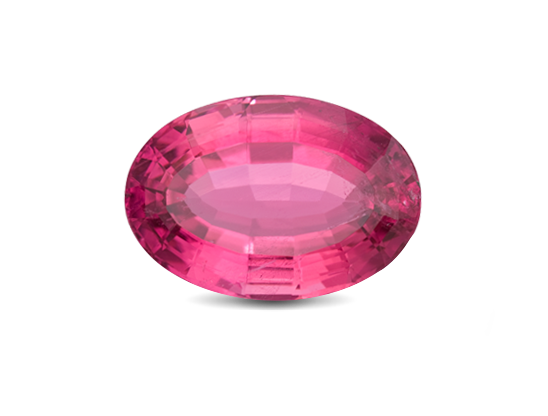
See Gem As
Tools
Research
Tourmaline as an Inclusion in Zambian Emeralds
A report on Zambian emeralds with tourmaline inclusions.
Sri Lanka: The Gem Island
An overview of the many types of gem-quality material, and its inclusions, currently found in Sri Lanka.
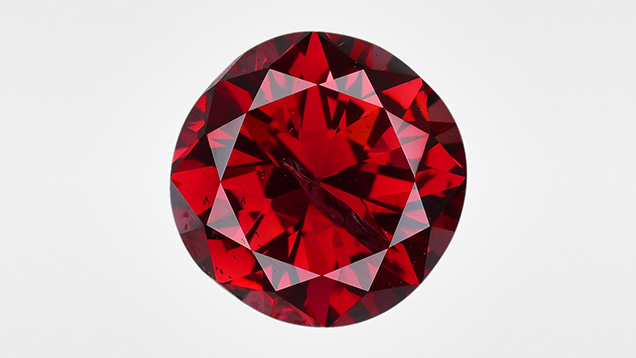
Exceptional Natural-Color Fancy Red Diamond
An extremely rare natural-color red diamond is submitted to the Carlsbad laboratory.
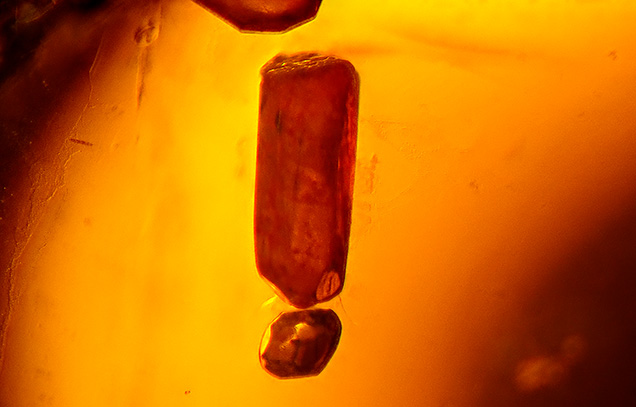
Small “Surprise” in Elbaite Tourmaline
Diopside crystals observed in elbaite tourmaline resemble an exclamation point.
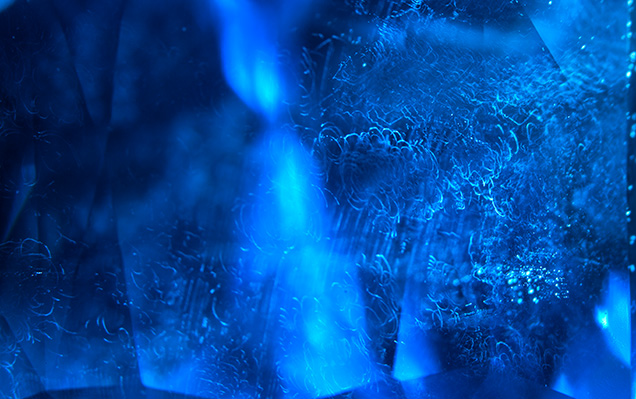
“Smoke Rings” in a Non-Beryllium-Diffused Sapphire
A rare look at a smoke ring pattern identified in sapphire without the presence of beryllium.
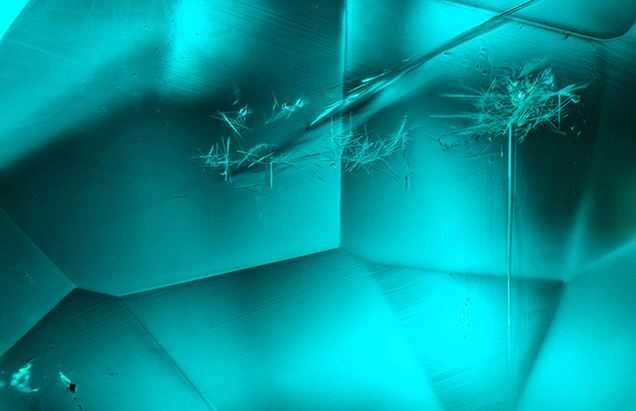
Stellate Zircon in a Paraíba Tourmaline
Fiber-optic light reveals a remarkable set of stellate inclusions in blue-green Paraíba tourmaline.
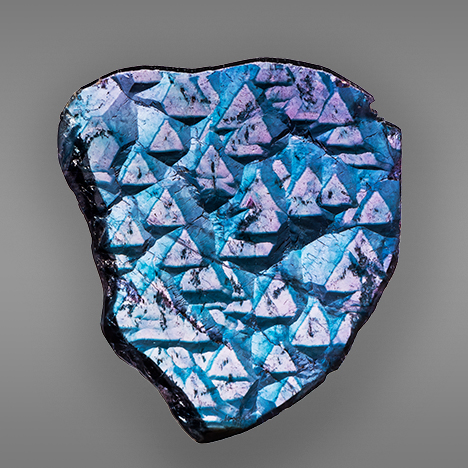
Tourmaline Termination
Abstracts; Spring 1991
This article, from the Spring 1991 issue of Gems & Gemology, is a compilation of abstracts of important gemology-related articles published outside of Gems & Gemology.
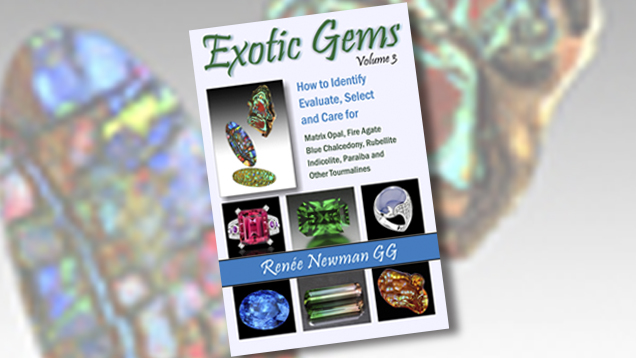
Books: Exotic Gems, Volume 3
Review of Exotic Gems, Vol. 3: How to Identify, Evaluate, Select and Care for Matrix Opal, Fire Agate, Blue Chalcedony, Rubellite Indicolite, Paraíba and Other Tourmalines, by Renee Newman.
Copper-Bearing Tourmalines from New Deposits in Paraíba State, Brazil
Two new deposits of Cu-bearing tourmaline have been found in Paraíba State, Brazil, not far from the original source at Mina da Batalha.
Multicolored Bismuth-bearing Tourmaline from Lundazi, Zambia
Tourmalines from an alluvial deposit near Lundazi in Zambia consist of color zoned pink/colorless/yellow-green “watermelon” nodules.