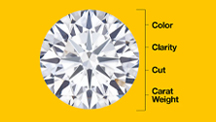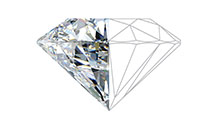

When you buy a diamond with a GIA grading report, you're getting the gold standard in diamond identification and quality assessment. GIA developed the 4Cs—color, clarity, cut, and carat weight—and is the trusted authority that has graded some of the world’s most famous diamonds, including the legendary Hope Diamond.
GIA was also the first U.S. laboratory to issue comprehensive gemstone grading reports and is internationally recognized for its independent, objective and thorough analysis.
Here’s a step-by-step look at what happens when a diamond arrives at a GIA laboratory for evaluation and grading.
Step 1: Diamond Intake
Once a diamond is submitted:
- Your name or store info is removed so grading is anonymous and unbiased. Every diamond, whether from a local jeweler or a globally recognized brand, is evaluated using the same rigorous, objective standards.
- GIA records the gem’s basic measurements and weight and calculates its specific gravity.
- Diamonds have a specific gravity of 3.52, meaning they are approximately 3.5 times denser than water.
Step 2: Diamond Testing & Initial Screening
D-to-Z diamonds are tested using FTIR (Fourier Transform Infrared Absorption Spectroscopy), which measures how the stone absorbs infrared light. This test detects impurities — such as nitrogen, boron, and hydrogen — which helps gemologists determine diamond type and chemical composition. Most colorless laboratory-grown diamonds are type IIa, making FTIR a powerful screening tool.
FTIR results help indicate whether additional testing is needed. Based on these results, stones are sorted into:
Pass — likely a natural, untreated diamond
Refer — may be laboratory-grown or treated and needs additional testing
These results provide an early indication of the diamond’s origin, but they are only one step in the screening process. The results are considered together with numerous other tests to determine whether further analysis is required.
Diamonds that need further evaluation are sent to Identification Services, where advanced testing is performed to:
- Determine growth origin (natural or laboratory-grown)
- Determine color origin (whether natural or treated)
- Detect clarity treatments such as fracture filling and, in some cases, laser drilling
This process ensures that any treatments or non-natural growth characteristics are accurately identified before grading continues.
If the stone is not a diamond at all, it’s sent to the colored stone department for proper identification.

Step 3: Advanced Testing and Color Origin Analysis
For referred D-to-Z diamonds and all fancy color diamonds, GIA uses advanced tools to learn more about the diamond’s growth origin, treatments, and color origin:
Photoluminescence (PL) Spectroscopy (Defect Detection Tool)
Measures Emitted Light
PL spectroscopy uses a variety of lasers to measure the light a diamond emits across wavelengths from the ultraviolet to the infrared. This test reveals very low concentrations of atomic-scale defects in the diamond’s crystal structure and helps gemologists identify laboratory-grown diamonds and detect treatments that may have altered a natural diamond’s color.
UV-Vis-NIR Absorption Spectroscopy (Primary Color-Origin Tool)
Measures Absorbed Light
This method analyzes how a diamond absorbs light across ultraviolet, visible, and near-infrared wavelengths to determine the cause of its color. Various impurities and structural features inside the diamond absorb specific wavelengths of light, creating patterns that act like fingerprints. These absorption patterns can reveal the cause of color and help signify whether a diamond’s color formed naturally or resulted from treatment.
Deep UV Fluorescence Imaging (Growth Pattern Tool)
Scientists use deep ultraviolet light to reveal internal growth patterns inside a diamond. These patterns appear as fluorescent bands or zones formed during crystal growth. Because natural and laboratory-grown diamonds form under different conditions, they show distinct growth patterns that help gemologists distinguish between them.
Did you know fluorescence is vital to gemstone identification? Discover what fluorescence tells us.
Phosphorescence (Screening Indicator)
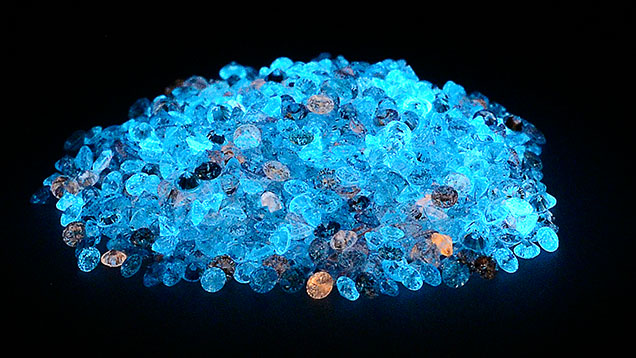
Some diamonds continue to glow after exposure to short-wave or deep ultraviolet light. If a D-to-Z diamond shows phosphorescence, it may be laboratory-grown. Additionally, some natural fancy-color diamonds can also show phosphorescence.
All of these advanced tests help determine whether a diamond is natural or laboratory-grown and explain how its color formed.
Step 4: Grading Natural Diamonds
Natural diamonds, including those identified as having treated color, are evaluated using the 4Cs of diamond quality—color, clarity, cut and carat weight—an international standard developed by GIA. GIA’s Natural Diamond Grading Reports provide a full assessment of a diamond’s 4Cs with a plotted diamond clarity diagram and full disclosure of potential treatments.
Clarity
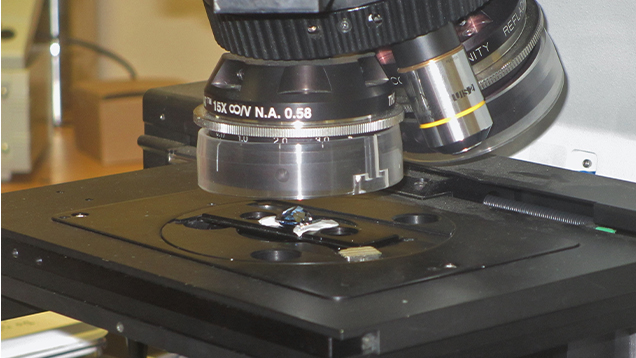
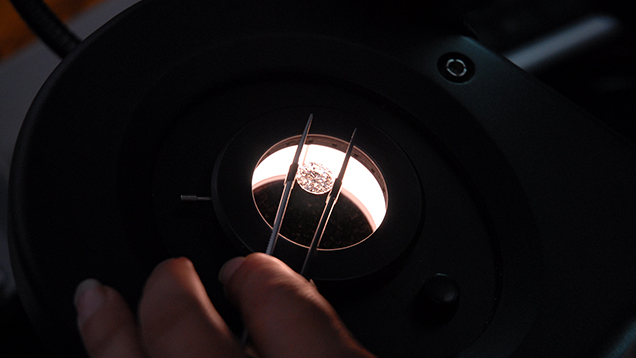
GIA gemologists use a loupe and 10x magnification on the GIA® Gemolite NXT® gem microscope to determine how free a diamond is from internal inclusions and surface blemishes.
- Multiple gemologists independently assess each diamond’s clarity to ensure objectivity and consistency.
- They assign a clarity grade from Flawless to Included based on the number, size, relief, nature and location of inclusions and blemishes.
GIA gemologists use up to 50x magnification to:
- Spot clarity treatments like laser drilling, fracture-filling or dyeing
- Study the types of blemishes and inclusions, which can tell if a gem is natural vs. lab-grown
- Identify coatings, assembled stones, damage, heat treatment and more
GIA scientists use different lighting to highlight various features:
- Darkfield: makes inclusions stand out
- Brightfield: shows color zoning
- Reflected light: best for surface features
- Fiber-optic lighting: pinpoint light that can be adjusted to any angle
- Polarized light: helps see internal stress and patterns
Learn more about Diamond Clarity.
Color
Diamonds are viewed under controlled lighting and compared to masterstones to determine color. “White” or colorless diamonds are graded on a D-to-Z scale from colorless (D) to light yellow or brown (Z). Fancy color diamonds (such as pinks, blues, greens, saturated yellows and browns) are graded based on hue, tone and saturation (ex: Fancy Vivid Blue).
Learn more about Diamond Color.
Cut
Round brilliant diamonds are assigned cut grades ranging from Excellent to Poor.
- The cut grade is based on brightness, fire, scintillation, weight ratio, and durability.
- Diamonds with Excellent cut, polish and symmetry are known as Triple X diamonds. They tend to have greater brilliance and a crisper, more even face-up patterns than diamonds with lower cut grades.
Both round brilliants and fancy shapes are evaluated for polish and symmetry.
Learn more about Diamond Cut.
Carat Weight
Carat measures a gemstone’s weight. One carat equals 200 milligrams, and it’s divided into 100 points—so weights are reported to the hundredth of a carat (two decimal places). Even tiny differences can affect a diamond’s value, especially near weights like 1.00 carat, so precise measurement is essential.
To ensure accuracy, GIA uses a high-precision micro-balance that measures weight to the fifth decimal place (hundred thousandth place).
After weighing:
- GIA rounds the weight to the thousandth place using regular rounding rules.
- GIA then rounds the weight to the hundredth place using a strict rule:
- If the thousandth digit is 9, the weight rounds up.
- Otherwise, it rounds down.
This consistent method ensures fairness and accuracy across all reports. By accounting for even the smallest variations, GIA provides the precision needed in a market where a few points can make a meaningful difference in price.
Learn more about Diamond Carat Weight.
Assessing D-to-Z Laboratory-Grown Diamonds
GIA now uses a revised evaluation system for D-to-Z laboratory-grown diamonds. Because most laboratory-grown diamonds fall within a narrow range of color and clarity, using the full 4Cs grading scale developed for natural diamonds is no longer relevant for a manufactured product. Instead, GIA assesses each submitted diamond and assigns it to one of two categories—Premium or Standard—based on its overall quality. Laboratory-grown diamonds that do not meet the minimum criteria for the Standard category do not receive a GIA assessment. GIA’s Laboratory-Grown Diamond Assessment provides an overall quality evaluation in an easy-to-understand format.
Premium Laboratory-Grown Diamonds
A laboratory-grown diamond is classified as Premium only if it meets all the following criteria:
- Clarity: Very, Very Slightly Included (VVS) or higher
- Color: D
- Polish & Symmetry: Excellent
- Cut Grade: Excellent (round brilliant diamonds only)
These diamonds represent the highest-quality D-to-Z laboratory-grown diamonds submitted for evaluation.
Standard Laboratory-Grown Diamonds
A laboratory-grown diamond is classified as Standard if it meets any combination of Premium criteria and all of the following minimum thresholds:
- Clarity: Very Slightly Included (VS)
- Color: J
- Polish: Very Good
- Symmetry: Very Good (Good acceptable for fancy shapes)
- Cut Grade: Very Good (round brilliant diamonds only)
Grading Fancy Color Laboratory-Grown Diamonds
GIA evaluates laboratory-grown fancy-color diamonds with the same scientific rigor applied to natural fancy color diamonds. Each stone is analyzed for its color, clarity and growth characteristics using advanced instrumentation.
GIA’s Laboratory-Grown Colored Diamond Report documents the diamond’s growth type (HPHT or CVD), determines its color origin, and indicates whether post-growth color treatment was detected. It also provides a clarity grade and carat weight.
Step 5: The Return Home
Once the evaluation is complete, your diamond is carefully packaged and returned—accompanied by a GIA report, providing clarity and confidence.
To further enhance security and peace of mind, diamonds with GIA Diamond Dossiers are laser-inscribed with their GIA report number—a unique identifier that links the stone to its report and helps ensure traceability.
Laboratory-grown diamonds are inscribed with the word “LABORATORY-GROWN” along with its report number.
Training & Expertise
Does all this sound complex? That’s because it is! GIA diamond graders undergo rigorous, specialized training to evaluate diamond quality with accuracy and consistency. They are also trained to operate advanced, highly specialized laboratory instruments—tools available only in elite gemological labs like GIA.
In addition to graders, GIA scientists and gemologists also identify and analyze gemstones to determine whether they are natural, laboratory-grown or treated, and conduct research to develop new detection methods and advance gemological knowledge.
Whether you're a retailer helping customers choose the perfect engagement ring or an individual buying a special diamond for yourself or a loved one, GIA grading reports provide peace of mind so you can be sure you know exactly what you are buying. Each report is the result of decades of research, expert analysis and cutting-edge science—designed to protect buyers and support sellers alike.
How to Submit Your Diamond to GIA
Ready to uncover the full story behind your diamond? Submitting a diamond to GIA is a simple and secure process. Whether you're seeking identification, country of origin determination or treatment analysis, GIA ensures expert handling and trusted results.
Find out how to submit your diamond and start its journey through GIA’s world-renowned identification and evaluation process.
Phoebe Shang, a senior writer at GIA, is a Graduate Gemologist.
When you buy a diamond with a GIA grading report, you're getting the gold standard in diamond identification and quality assessment. GIA developed the 4Cs—color, clarity, cut, and carat weight—and is the trusted authority that has graded some of the world’s most famous diamonds, including the legendary Hope Diamond.
GIA was also the first U.S. laboratory to issue comprehensive gemstone grading reports and is internationally recognized for its independent, objective and thorough analysis.
Here’s a step-by-step look at what happens when a diamond arrives at a GIA laboratory for evaluation and grading.
Step 1: Diamond Intake
Once a diamond is submitted:
- Your name or store info is removed so grading is anonymous and unbiased. Every diamond, whether from a local jeweler or a globally recognized brand, is evaluated using the same rigorous, objective standards.
- GIA records the gem’s basic measurements and weight and calculates its specific gravity.
- Diamonds have a specific gravity of 3.52, meaning they are approximately 3.5 times denser than water.
Step 2: Diamond Testing & Initial Screening
D-to-Z diamonds are tested using FTIR (Fourier Transform Infrared Absorption Spectroscopy), which measures how the stone absorbs infrared light. This test detects impurities — such as nitrogen, boron, and hydrogen — which helps gemologists determine diamond type and chemical composition. Most colorless laboratory-grown diamonds are type IIa, making FTIR a powerful screening tool.
FTIR results help indicate whether additional testing is needed. Based on these results, stones are sorted into:
Pass — likely a natural, untreated diamond
Refer — may be laboratory-grown or treated and needs additional testing
These results provide an early indication of the diamond’s origin, but they are only one step in the screening process. The results are considered together with numerous other tests to determine whether further analysis is required.
Diamonds that need further evaluation are sent to Identification Services, where advanced testing is performed to:
- Determine growth origin (natural or laboratory-grown)
- Determine color origin (whether natural or treated)
- Detect clarity treatments such as fracture filling and, in some cases, laser drilling
This process ensures that any treatments or non-natural growth characteristics are accurately identified before grading continues.
If the stone is not a diamond at all, it’s sent to the colored stone department for proper identification.
Step 3: Advanced Testing and Color Origin Analysis
For referred D-to-Z diamonds and all fancy color diamonds, GIA uses advanced tools to learn more about the diamond’s growth origin, treatments, and color origin:
Photoluminescence (PL) Spectroscopy (Defect Detection Tool)
Measures Emitted Light
PL spectroscopy uses a variety of lasers to measure the light a diamond emits across wavelengths from the ultraviolet to the infrared. This test reveals very low concentrations of atomic-scale defects in the diamond’s crystal structure and helps gemologists identify laboratory-grown diamonds and detect treatments that may have altered a natural diamond’s color.
UV-Vis-NIR Absorption Spectroscopy (Primary Color-Origin Tool)
Measures Absorbed Light
This method analyzes how a diamond absorbs light across ultraviolet, visible, and near-infrared wavelengths to determine the cause of its color. Various impurities and structural features inside the diamond absorb specific wavelengths of light, creating patterns that act like fingerprints. These absorption patterns can reveal the cause of color and help signify whether a diamond’s color formed naturally or resulted from treatment.
Deep UV Fluorescence Imaging (Growth Pattern Tool)
Scientists use deep ultraviolet light to reveal internal growth patterns inside a diamond. These patterns appear as fluorescent bands or zones formed during crystal growth. Because natural and laboratory-grown diamonds form under different conditions, they show distinct growth patterns that help gemologists distinguish between them.
Did you know fluorescence is vital to gemstone identification? Discover what fluorescence tells us.
Phosphorescence (Screening Indicator)
Some diamonds continue to glow after exposure to short-wave or deep ultraviolet light. If a D-to-Z diamond shows phosphorescence, it may be laboratory-grown. Additionally, some natural fancy-color diamonds can also show phosphorescence.
All of these advanced tests help determine whether a diamond is natural or laboratory-grown and explain how its color formed.
Step 4: Grading Natural Diamonds
Natural diamonds, including those identified as having treated color, are evaluated using the 4Cs of diamond quality—color, clarity, cut and carat weight—an international standard developed by GIA. GIA’s Natural Diamond Grading Reports provide a full assessment of a diamond’s 4Cs with a plotted diamond clarity diagram and full disclosure of potential treatments.
Clarity
GIA gemologists use a loupe and 10x magnification on the GIA® Gemolite NXT® gem microscope to determine how free a diamond is from internal inclusions and surface blemishes.
- Multiple gemologists independently assess each diamond’s clarity to ensure objectivity and consistency.
- They assign a clarity grade from Flawless to Included based on the number, size, relief, nature and location of inclusions and blemishes.
GIA gemologists use up to 50x magnification to:
- Spot clarity treatments like laser drilling, fracture-filling or dyeing
- Study the types of blemishes and inclusions, which can tell if a gem is natural vs. lab-grown
- Identify coatings, assembled stones, damage, heat treatment and more
GIA scientists use different lighting to highlight various features:
- Darkfield: makes inclusions stand out
- Brightfield: shows color zoning
- Reflected light: best for surface features
- Fiber-optic lighting: pinpoint light that can be adjusted to any angle
- Polarized light: helps see internal stress and patterns
Learn more about Diamond Clarity.
Color
Diamonds are viewed under controlled lighting and compared to masterstones to determine color. “White” or colorless diamonds are graded on a D-to-Z scale from colorless (D) to light yellow or brown (Z). Fancy color diamonds (such as pinks, blues, greens, saturated yellows and browns) are graded based on hue, tone and saturation (ex: Fancy Vivid Blue).
Learn more about Diamond Color.
Cut
Round brilliant diamonds are assigned cut grades ranging from Excellent to Poor.
- The cut grade is based on brightness, fire, scintillation, weight ratio, and durability.
- Diamonds with Excellent cut, polish and symmetry are known as Triple X diamonds. They tend to have greater brilliance and a crisper, more even face-up patterns than diamonds with lower cut grades.
Both round brilliants and fancy shapes are evaluated for polish and symmetry.
Learn more about Diamond Cut.
Carat Weight
Carat measures a gemstone’s weight. One carat equals 200 milligrams, and it’s divided into 100 points—so weights are reported to the hundredth of a carat (two decimal places). Even tiny differences can affect a diamond’s value, especially near weights like 1.00 carat, so precise measurement is essential.
To ensure accuracy, GIA uses a high-precision micro-balance that measures weight to the fifth decimal place (hundred thousandth place).
After weighing:
- GIA rounds the weight to the thousandth place using regular rounding rules.
- GIA then rounds the weight to the hundredth place using a strict rule:
- If the thousandth digit is 9, the weight rounds up.
- Otherwise, it rounds down.
This consistent method ensures fairness and accuracy across all reports. By accounting for even the smallest variations, GIA provides the precision needed in a market where a few points can make a meaningful difference in price.
Learn more about Diamond Carat Weight.
Assessing D-to-Z Laboratory-Grown Diamonds
GIA now uses a revised evaluation system for D-to-Z laboratory-grown diamonds. Because most laboratory-grown diamonds fall within a narrow range of color and clarity, using the full 4Cs grading scale developed for natural diamonds is no longer relevant for a manufactured product. Instead, GIA assesses each submitted diamond and assigns it to one of two categories—Premium or Standard—based on its overall quality. Laboratory-grown diamonds that do not meet the minimum criteria for the Standard category do not receive a GIA assessment. GIA’s Laboratory-Grown Diamond Assessment provides an overall quality evaluation in an easy-to-understand format.
Premium Laboratory-Grown Diamonds
A laboratory-grown diamond is classified as Premium only if it meets all the following criteria:
- Clarity: Very, Very Slightly Included (VVS) or higher
- Color: D
- Polish & Symmetry: Excellent
- Cut Grade: Excellent (round brilliant diamonds only)
These diamonds represent the highest-quality D-to-Z laboratory-grown diamonds submitted for evaluation.
Standard Laboratory-Grown Diamonds
A laboratory-grown diamond is classified as Standard if it meets any combination of Premium criteria and all of the following minimum thresholds:
- Clarity: Very Slightly Included (VS)
- Color: J
- Polish: Very Good
- Symmetry: Very Good (Good acceptable for fancy shapes)
- Cut Grade: Very Good (round brilliant diamonds only)
Grading Fancy Color Laboratory-Grown Diamonds
GIA evaluates laboratory-grown fancy-color diamonds with the same scientific rigor applied to natural fancy color diamonds. Each stone is analyzed for its color, clarity and growth characteristics using advanced instrumentation.
GIA’s Laboratory-Grown Colored Diamond Report documents the diamond’s growth type (HPHT or CVD), determines its color origin, and indicates whether post-growth color treatment was detected. It also provides a clarity grade and carat weight.
Step 5: The Return Home
Once the evaluation is complete, your diamond is carefully packaged and returned—accompanied by a GIA report, providing clarity and confidence.
To further enhance security and peace of mind, diamonds with GIA Diamond Dossiers are laser-inscribed with their GIA report number—a unique identifier that links the stone to its report and helps ensure traceability.
Laboratory-grown diamonds are inscribed with the word “LABORATORY-GROWN” along with its report number.
Training & Expertise
Does all this sound complex? That’s because it is! GIA diamond graders undergo rigorous, specialized training to evaluate diamond quality with accuracy and consistency. They are also trained to operate advanced, highly specialized laboratory instruments—tools available only in elite gemological labs like GIA.
In addition to graders, GIA scientists and gemologists also identify and analyze gemstones to determine whether they are natural, laboratory-grown or treated, and conduct research to develop new detection methods and advance gemological knowledge.
Whether you're a retailer helping customers choose the perfect engagement ring or an individual buying a special diamond for yourself or a loved one, GIA grading reports provide peace of mind so you can be sure you know exactly what you are buying. Each report is the result of decades of research, expert analysis and cutting-edge science—designed to protect buyers and support sellers alike.
How to Submit Your Diamond to GIA
Ready to uncover the full story behind your diamond? Submitting a diamond to GIA is a simple and secure process. Whether you're seeking identification, country of origin determination or treatment analysis, GIA ensures expert handling and trusted results.
Find out how to submit your diamond and start its journey through GIA’s world-renowned identification and evaluation process.
Phoebe Shang, a senior writer at GIA, is a Graduate Gemologist.