
See Gem As
Tools
Research
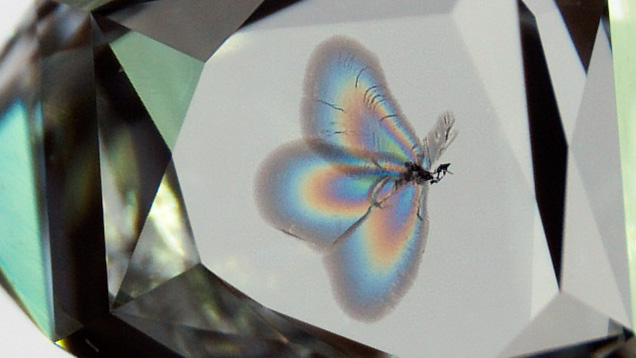
Exquisite Butterfly in Diamond
A crystal inclusion with a stress halo resembles a colorful butterfly in a 1.01 ct diamond.
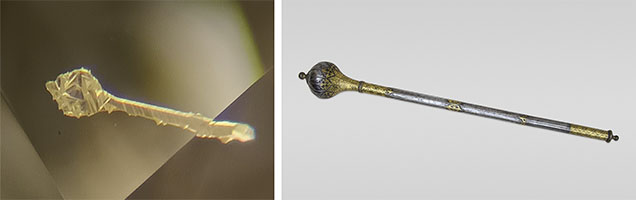
Inclusion Resembling a Gada in Diamond
An etch channel in the crown facets of a diamond resembles a mace-like weapon.
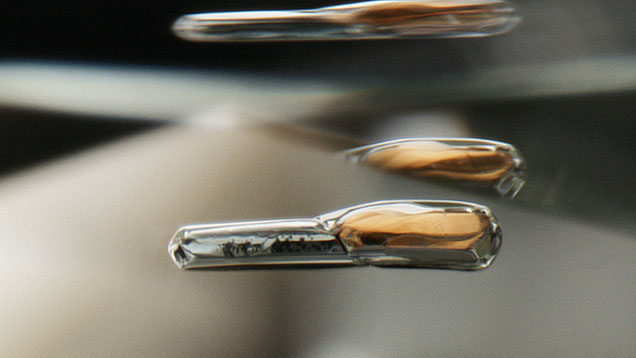
Eclogite: Diamond-Encrusted Ancient Seafloor
Explores eclogitic diamonds, which make up a significant portion of the gem diamond market, and what they reveal about Earth’s dynamic processes.
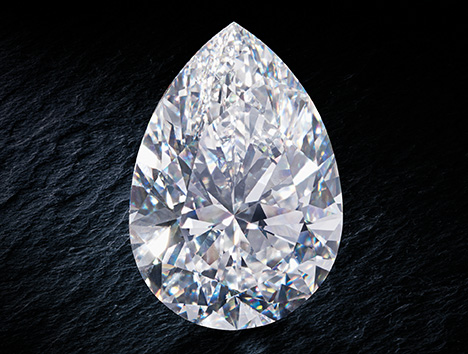
Spring 2022 Auction Highlights
Large near colorless, blue, and yellow diamonds broke auction records at Christie’s and Sotheby’s in the first half of 2022.
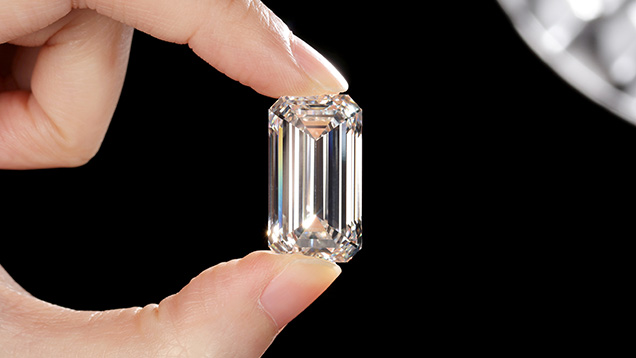
CVD Diamond Over 34 Carats
A look at a 34.59 ct CVD-grown diamond examined at GIA’s Hong Kong laboratory.
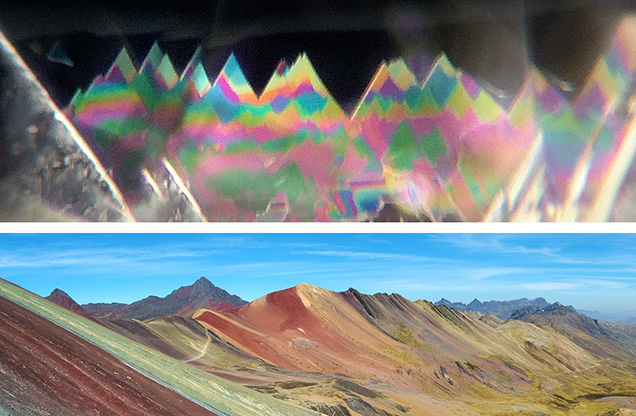
Rainbow Mountain in Natural Diamond
An iridescent feather inclusion in natural diamond bears resemblance to Rainbow Mountain in Peru.
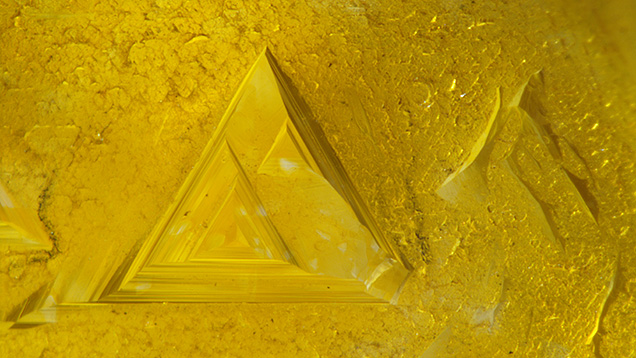
Patchy Yellow Trigon
Isolated nitrogen confined to the outer surface of a 0.98 ct diamond causes “yellow skin.”
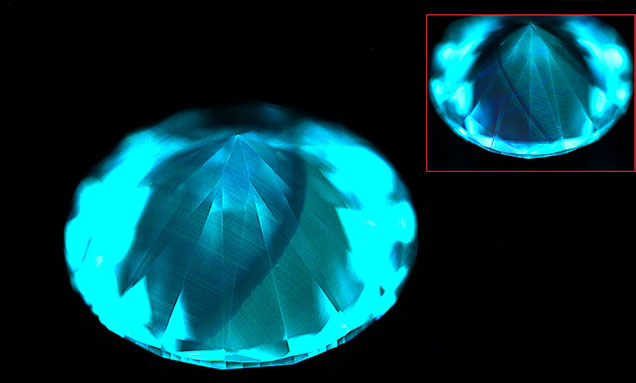
Natural Diamond with CVD-Like Fluorescence Pattern
Examination of a natural diamond reveals graining and zoning that resemble those of a laboratory-grown CVD diamond.
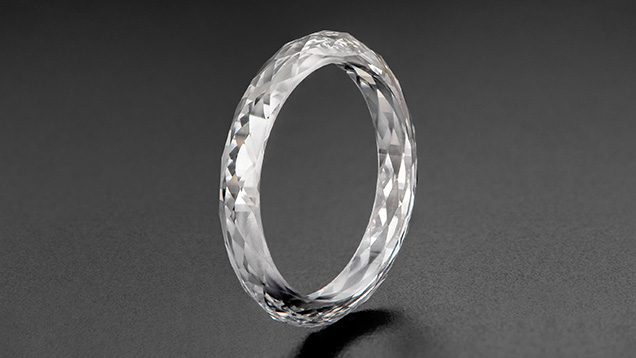
Solid Laboratory-Grown Single-Crystal Diamond Ring
The quality and size of this 4.04 ct CVD-grown diamond ring demonstrate the advancing technology in laboratory-grown diamonds.
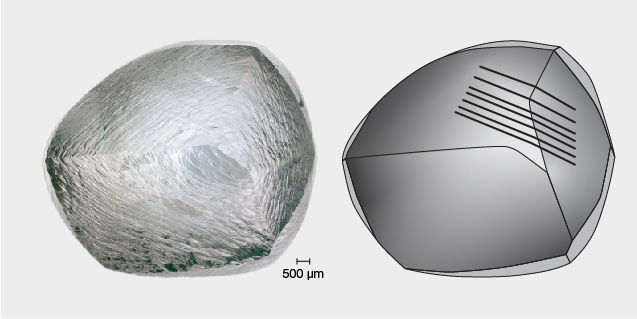
Plastic Deformation: How and Why Are Most Diamonds Slightly Distorted?
A look at plastic deformation, one of the most prevalent features in natural diamond.
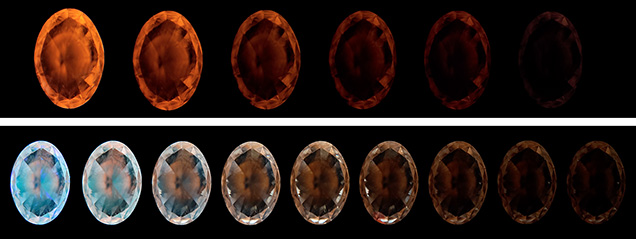
HPHT-Grown Colorless Diamond Displaying Unusual Phosphorescence Effects
Study of phosphorescence produced from visible light suggests future difficulty in accurately assessing bodycolor of HPHT-grown diamonds.
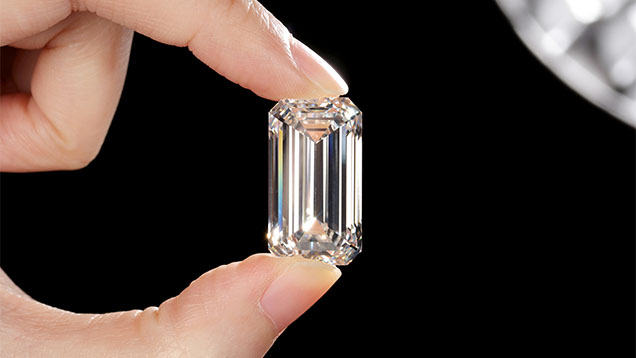
CVD Diamond Over 34 Carats Examined in GIA’s Hong Kong Laboratory
A look at the largest CVD diamond GIA has encountered to date.