
◂ BACK TO GEM ENCYCLOPEDIA
Alexandrite
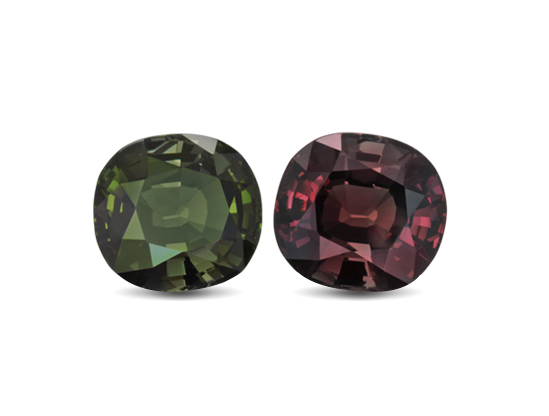
Green in sunlight. Red in lamplight. Color-changing alexandrite is nature’s magic trick.
See Gem As
Tools
Research
Spring 2004 Gem News International
A compilation of gem news from around the world, covering topics such as localities, unusual gem materials, market news, new products, discoveries, jewelry manufacturing techniques, and industry trends.
Spring 1991 G&G Lab Notes
This section, from the Spring 1991 issue of Gems & Gemology, is a compilation of interesting finds from GIA’s laboratories.
Chrysoberyl and Alexandrite from the Pegmatite Districts of Minas Gerais, Brazil
Mining fine cat's-eye chrysoberyl and alexandrite in Brazil.
Gemstones with Alexandrite Effect
The term "alexandrite effect" refers to the apparent change of color in certain minerals from blue-green or greenish violet in daylight to red or reddish violet in incandescent light.
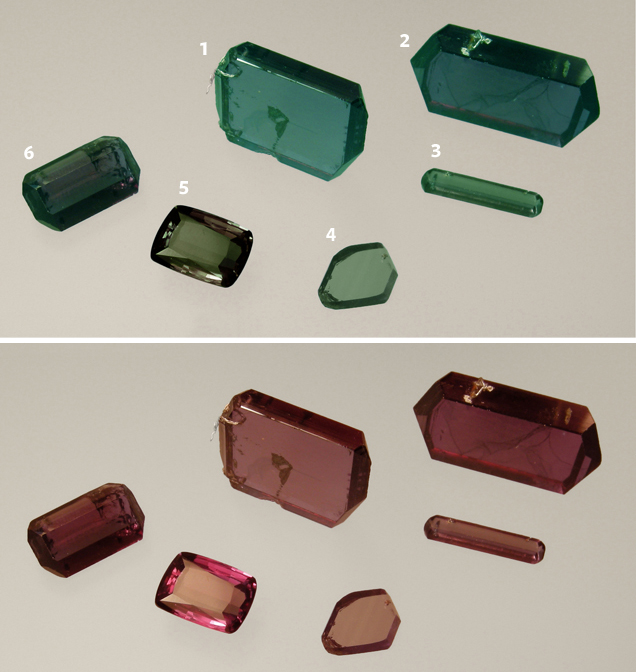
Decades-Old Synthetic Alexandrite Sheds Light on Modern Research Needs
An overview and commentary on the 2012 Journal of Gemmology article, “Flux-grown synthetic alexandrites from Creative Crystals Inc.”
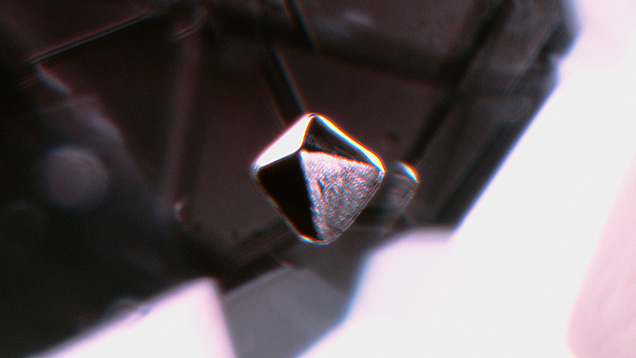
Fluorite in Brazilian Alexandrite
An octahedral fluorite crystal is observed in Brazilian alexandrite.
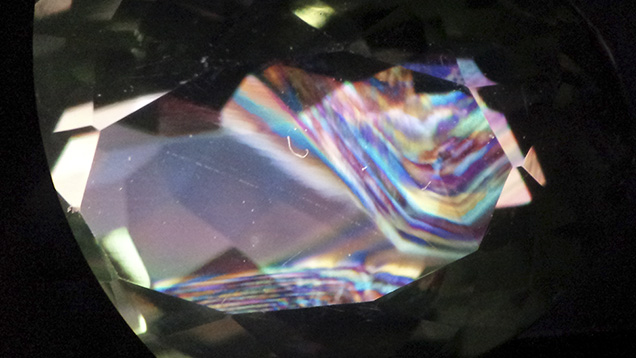
Prasiolite with Inclusion Influenced by Brazil-Law Twinning
A prasiolite specimen displaying Brazil-law twinning, usually seen in the amethyst variety of quartz, is examined.
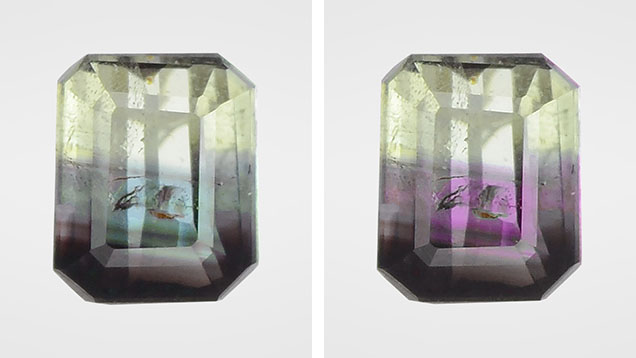
Bicolor Chrysoberyl with Chrysoberyl and Alexandrite Zones
The Tokyo laboratory reports on a submitted stone composed of both chrysoberyl and alexandrite.
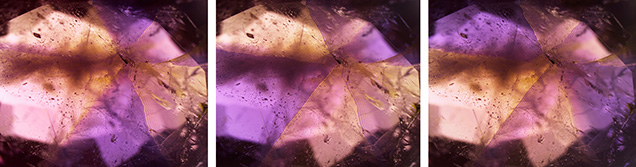
“Kaleidoscope” in Alexandrite
Pleochroic colors caused by cyclic twinning produce a kaleidoscope effect in alexandrite.
Inamori Synthetic Cat's-Eye Alexandrite
This article reports on a detailed gemological examination of this new synthetic cat's-eye alexandrite.
The Distinction of Natural from Synthetic Alexandrite by Infrared Spectroscopy
A useful way to identify stones that contain no distinguishing inclusions.